Hot water runs out fast in Queens, NY

Send the request and finding a pro stops being your problem.

I'm done searching

When hot water runs out fast, the tank usually can't recover quickly enough between uses, or it isn't heating the full tank anymore. A failing heating element or burner is a common cause. So is a buildup of sediment sitting at the bottom of the tank, which pushes the usable hot water above it and makes the burner or element work harder to heat less. A bad dip tube can also let cold incoming water mix straight into the hot water near the top of the tank, so you get lukewarm water sooner than you should. In a house with gas heat, a failing thermocouple or pilot can mean the burner shuts off before the water gets properly hot in the first place. Whatever the cause, this is a repair, not something to work around by spacing out showers. A plumber who checks the tank itself, the burner or element, and the thermostat can usually tell what's wrong in one visit.

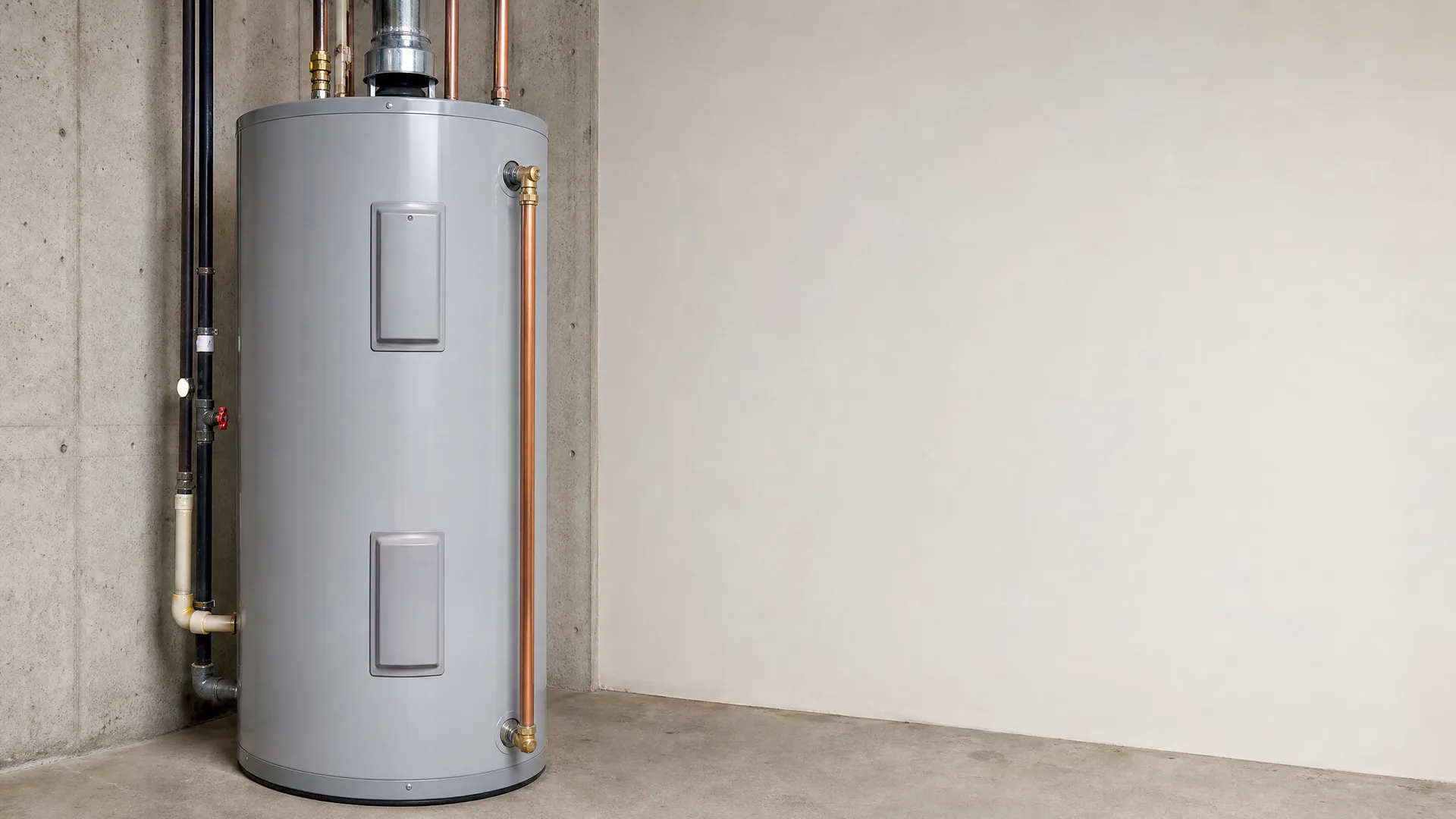
A gray cylindrical water heater with two access panels stands in a corner against a concrete wall, with copper and black pipes running up beside it on a bare concrete floor.

What sediment does to a tank

Queens has hard water, and over time that leaves a layer of sediment on the bottom of the tank. On a gas water heater, that layer sits between the burner and the water, so the flame heats the sediment first instead of the water above it. The tank takes longer to recover, and the water that does come up hot runs out sooner than it used to.

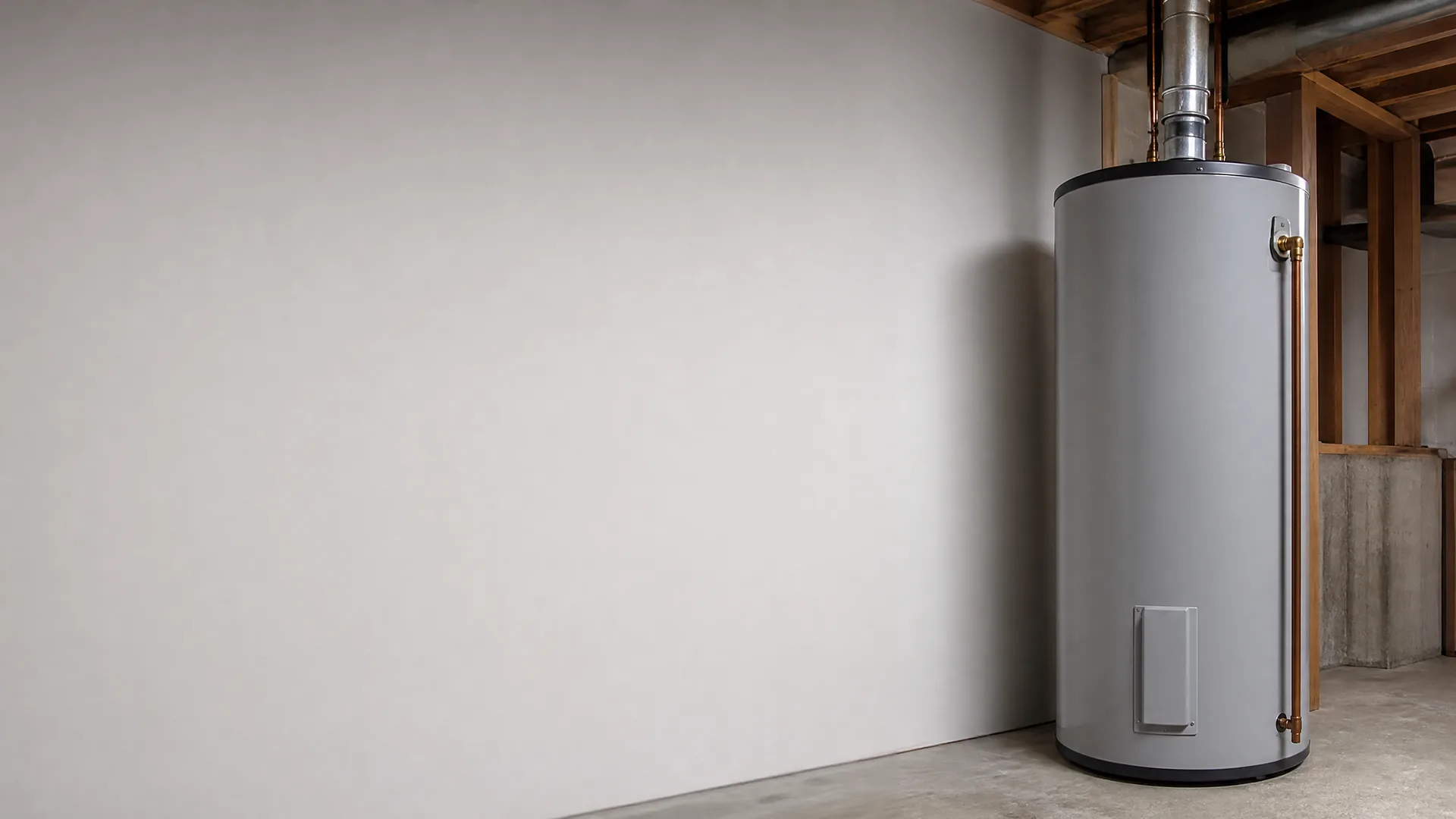
A gray cylindrical water heater with a metal flue pipe and copper piping stands in the corner of a bare room with light walls, a concrete floor, and exposed wood framing.

Checking the recovery rate

A gas water heater is rated to heat a certain number of gallons per hour, and that number drops when the burner can't do its job. If you time how long it takes for water to go from cold to hot at a tap, and that stretch has gotten longer over the past year, the tank itself is losing ground, not just the one appliance you're running.

Why does hot water run out so fast in your house?

  • 2.72 people per household on average

    With 2.72 people in the average household here, a tank sized for one or two is going to come up short by the third or fourth shower.

  • Half the homes here were built by 1953

    Half the homes in Queens County were built in 1953 or earlier, and a tank that came with a house that age is working harder than it used to.

  • 73.8% of homes heat with gas

    Gas heats 73.8% of homes in Queens County, so for most readers this means a burner and a thermostat, not an electric element, when recovery slows down.

ACS 2020-2024

The tank is undersized

If the water heater came with the house, it was sized for whatever family lived there before you, not yours. A unit that was fine for a couple falls short once more people are showering back to back. There's no fixing this by adjusting a dial. The tank holds what it holds, and once that's gone, you're waiting for it to recover. A contractor who looks at the tank and your household can tell you whether it was ever sized right, and what size would actually cover you.


The tank is failing

If hot water used to last and now it doesn't, the tank itself has changed, not your household. A heating element or burner that's losing strength won't bring the water up to temperature the way it used to. Sediment sitting at the bottom does the same thing, insulating the water from the heat meant for it. Either way the tank is working harder for less hot water. This gets diagnosed, not guessed at. Someone who services these units all season can tell which part failed and whether it's worth repairing.

A gray-haired man in a dark long-sleeve shirt sits on a gray sofa in a living room, looking toward a sunlit window with sheer curtains.
A gray-haired man in a dark green sweatshirt sits on a sofa in a living room, looking toward a bright window, with a houseplant, lamp, fireplace and framed art behind him.
A gray-haired bearded man in a dark green collared sweater sits on a sofa in a living room with a window, houseplant, floor lamp and bookshelves, looking off to the side.
A gray-haired man in a dark green sweater sits on a sofa in a sunlit living room, looking off to the side, with a framed landscape painting, dining table and shelving behind him.

One request and it's handed off

The pro who gets in touch is licensed in New York and works in Queens County.

There's no charge for the request.

If hot water in your house gives out by the second or third shower, you're not imagining it. Whatever's wrong with the tank, it's happening now, every day, until a licensed plumber looks at it.

A tank that can't keep up puts more than cold showers at risk. A gas burner struggling against sediment runs longer and hotter than it should, and that wears the tank from the inside out.

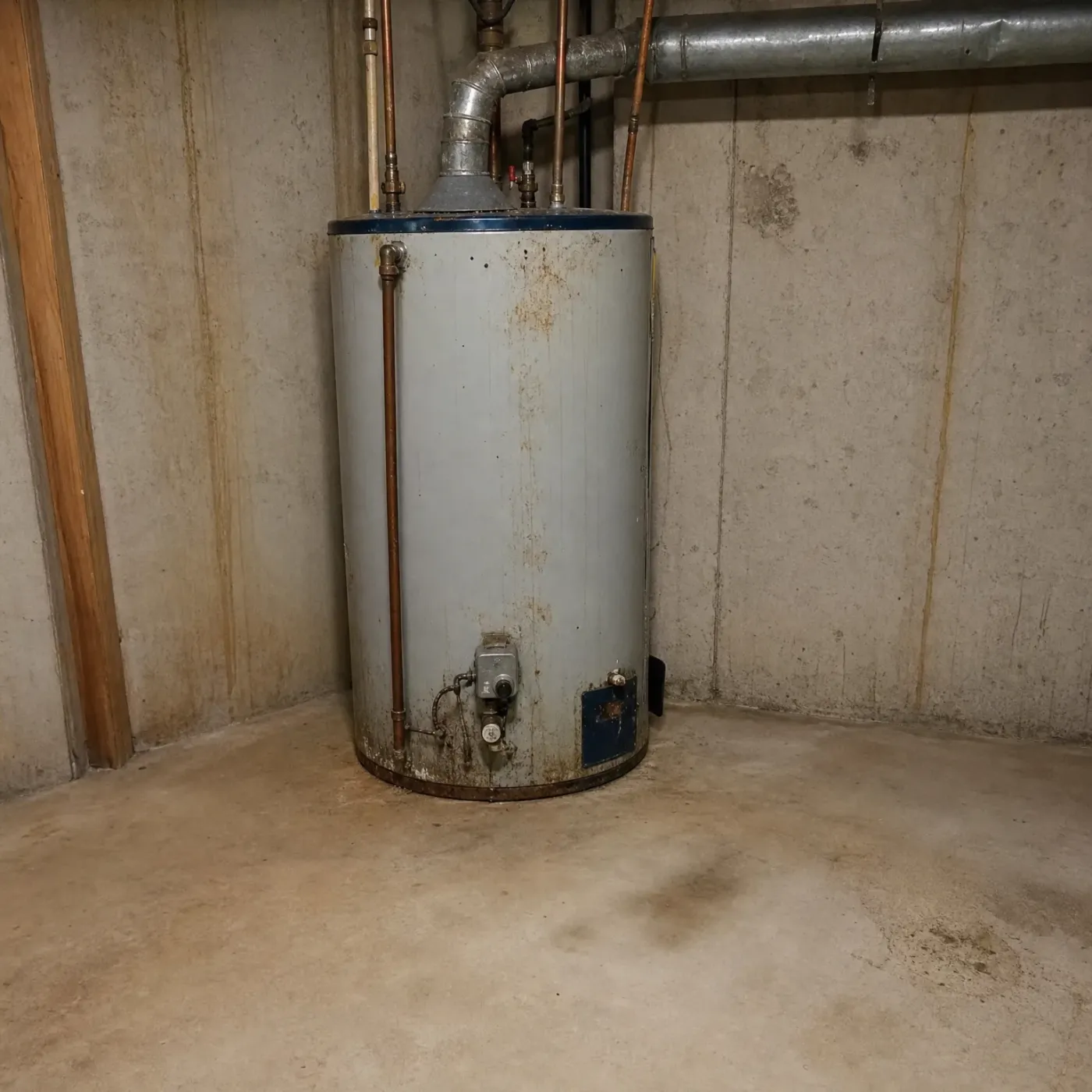
An aging gas water heater with rust streaks stands in the corner of a concrete-walled basement, with copper pipes and a metal flue duct running overhead.
Before you get your water heater repair
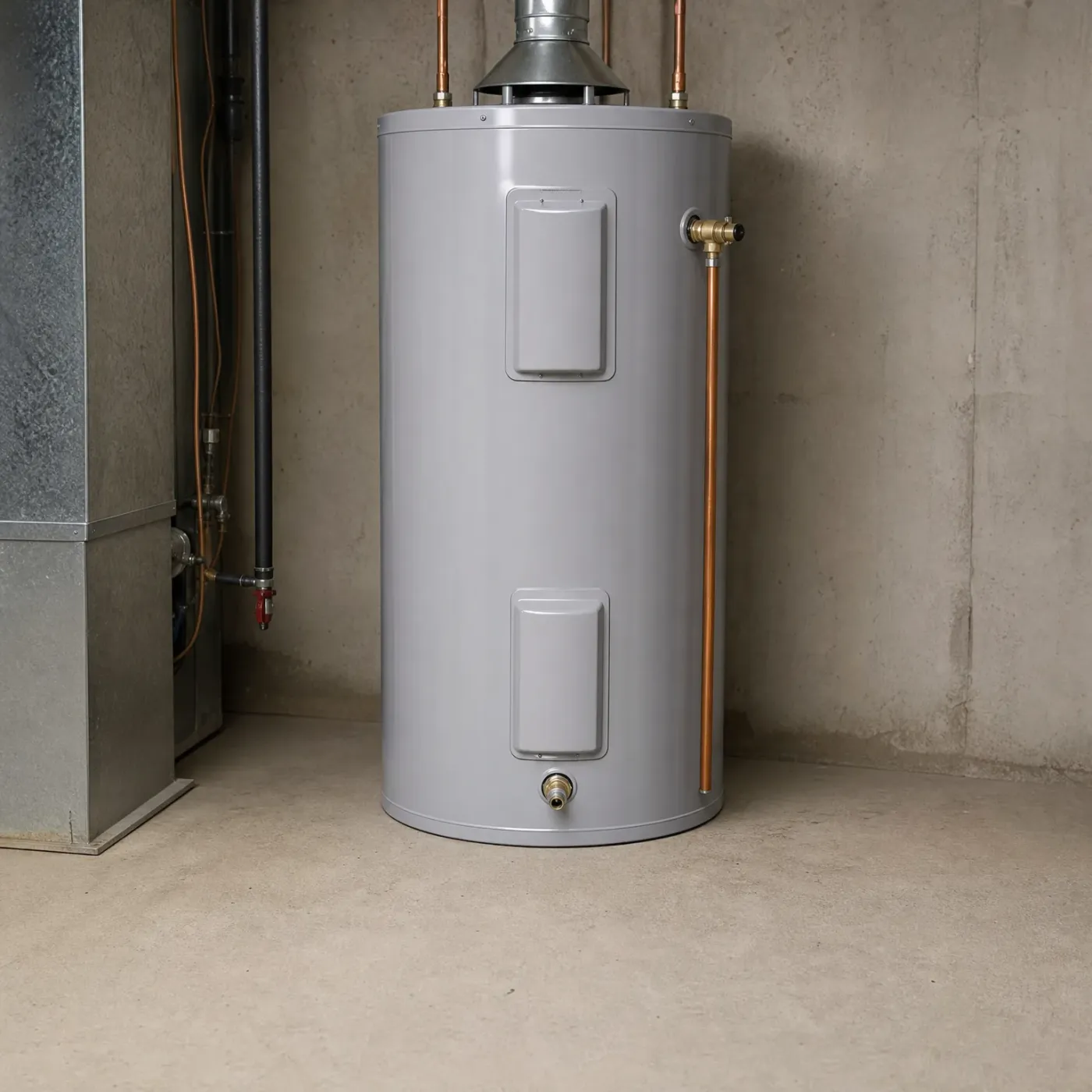
A gray cylindrical water heater with copper piping and a flue stands on a concrete floor in a basement corner beside ductwork and metal equipment.
After you get your water heater repair
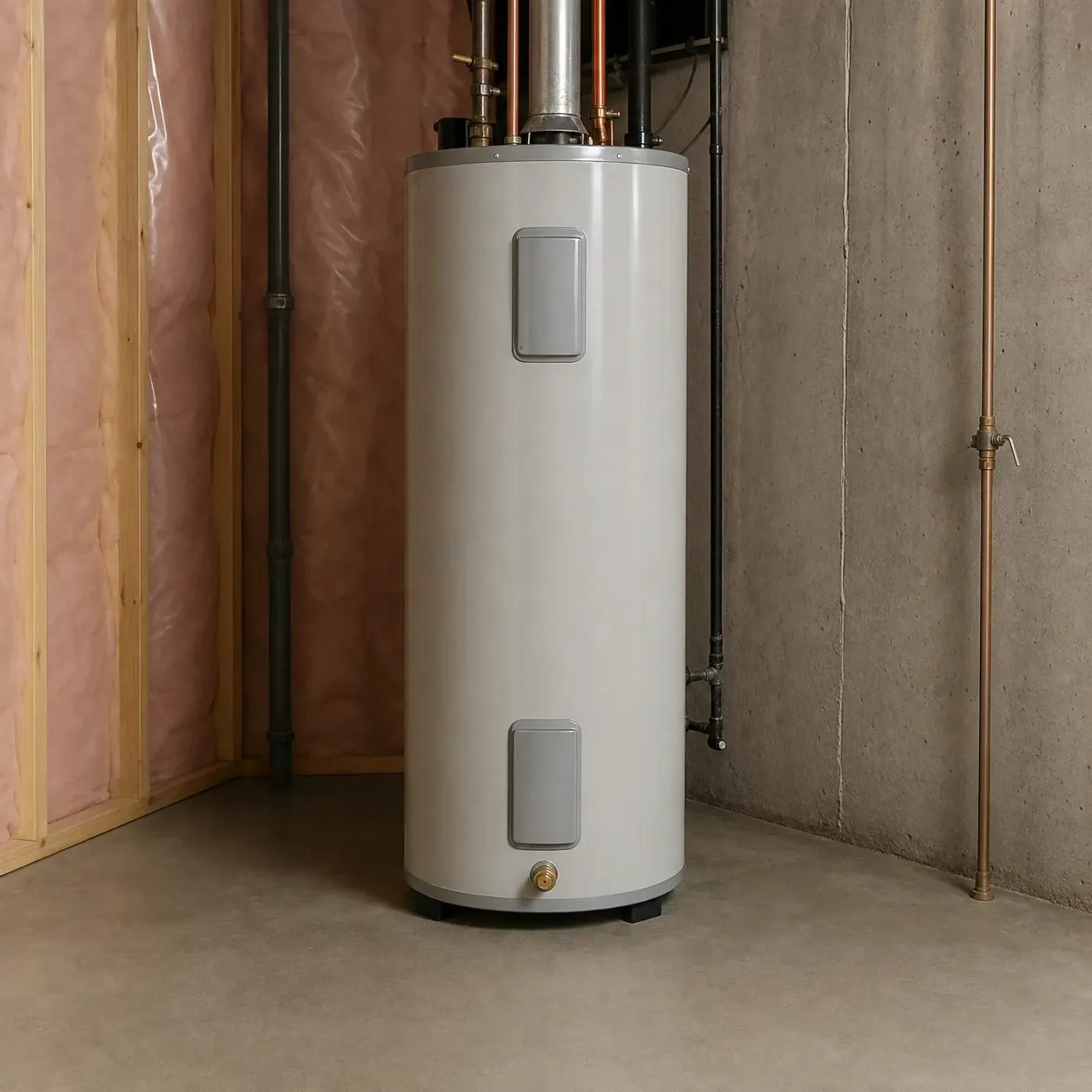
A white cylindrical water heater with two access panels and a brass drain valve stands on a concrete floor in a basement corner, beside a pink-insulated stud wall and a concrete wall with copper and black pipes.

Tank in working order

A water heater that's keeping up looks like this: clean connections, steady pipework, nothing leaking at the fittings. It's recovering between uses and sending hot water the full run of the house without the tank falling behind.

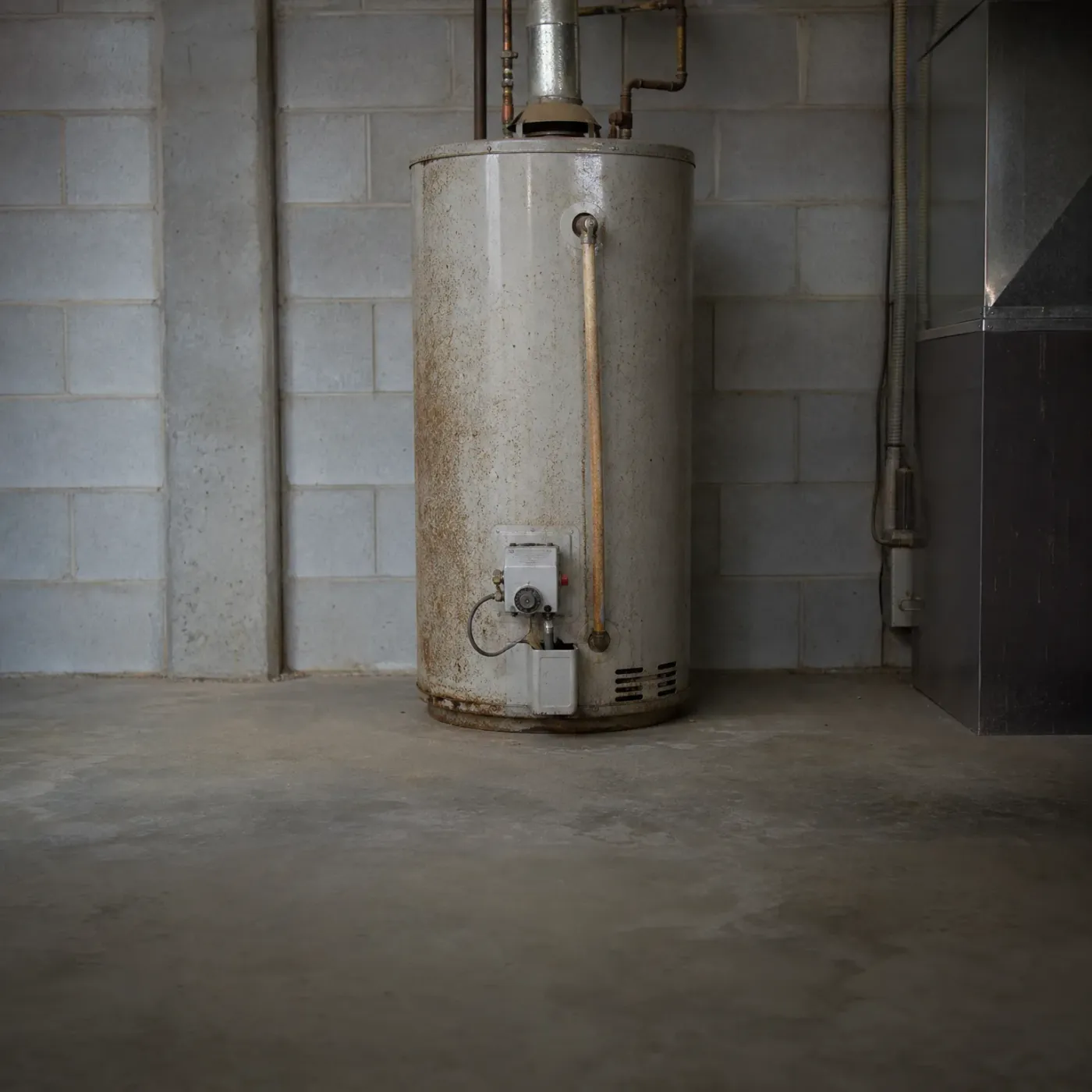
A rusted gas water heater with a flue pipe stands against a concrete block wall on a bare concrete floor, next to a dark metal duct or furnace cabinet at right.

Tank on its way out

Rust like this on the tank itself, not just the pipes, usually means the steel is corroding from the inside out. A tank in this shape is also more likely to be carrying the sediment buildup that keeps it from heating water through to the last person in line.

How long should it take for my water heater to recover?

You know your tank is slow to come back after you use it, but you're not sure what counts as normal versus what means something's wrong. Is it supposed to take this long, or is that the sign of a problem a plumber needs to look at?

A gas tank recovers in under an hour. Electric takes longer.

A gas water heater burns hotter and faster, so a full tank should be back to temperature in 30 to 60 minutes. Electric units heat slower, usually 1 to 2 hours, since the elements inside put out less heat than a burner. If recovery is running well past that, something's working against the burner or the elements. Sediment at the bottom of the tank is the most common cause, since it sits between the heat source and the water and slows everything down. A failing heating element or a burner that isn't getting enough gas will do the same thing. Either way, recovery that keeps stretching out longer is worth having a licensed plumber check before it gets worse.

  1. A plumber checks the thermostat setting and tests it for accuracy

  2. Burner or element gets inspected for buildup and proper operation

  3. Tank bottom gets checked for sediment and drained if needed

  4. Dip tube and anode rod get inspected for wear or damage

Power here costs 35.15 cents per kilowatt-hour

At 35.15 cents per kilowatt-hour, running an electric water heater harder to make up for a weak tank costs more here than almost anywhere else. If yours is electric and struggling to keep up, that's not a small add-on to your bill, it's a reason to get the tank fixed rather than just turning the thermostat up.

EIA-861 2025

Why Your Hot Water Runs Out

  • A tank running short on hot water is either undersized for the household or losing capacity to a failing part.
  • Sediment buildup, a bad heating element, or a worn thermostat all show up the same way: water that doesn't last.
  • Queens County's hard water speeds up sediment buildup, which is one more reason tanks here fall behind on recovery.
  • A licensed plumber checks the thermostat, inspects the burner or element, and drains sediment before replacing anything.
  • Running an electric tank harder to compensate costs more in Queens than in most of the country.
  • Waiting doesn't fix a tank that can't keep up. It gets looked at, or it keeps falling short every day.

Running out of hot water fast has one of two causes. Either the tank is too small for how many people are using it, or something inside it has stopped working the way it should. Both show up the same way to you, standing in a cold shower, but they're different problems with different fixes. A tank that's undersized needs a bigger tank. A tank that's failing needs a repair, and sometimes just a cleaning.

Queens County's hard water adds to the problem either way. Sediment collects faster here than it would somewhere with softer water, and that sediment sits between the heat source and the water itself, slowing recovery no matter how good the thermostat or burner is. Add a worn heating element, a thermostat that's reading wrong, or a burner that's not getting full output, and a tank that used to keep up starts falling behind.

A licensed plumber works through this in order. Thermostat setting first, checked against what the water's actually doing. Burner or element next, checked for buildup and for whether it's firing the way it should. Then the tank itself, drained if sediment has built up at the bottom. Nothing gets replaced until the simpler fixes are ruled out.

If your tank is electric, there's a cost to waiting that shows up on your bill before it shows up anywhere else. Queens has some of the highest electric rates in the country, and a tank working harder to make up for lost capacity is spending more of your money every single day it goes unfixed.

A woman with shoulder-length dark brown hair in a cream knit cardigan sits in an upholstered armchair beside a window, looking off to the side, with a white bookshelf and potted plant blurred behind her.
A woman with dark hair in a bun sits wrapped in a chunky knit blanket on a couch with a child resting his head on her shoulder, eyes closed, beside a lit lamp and bookshelf indoors.

Water Heater Repair

Done looking for a water heater pro

A licensed pro who works in Queens County gets your request.

A black smartphone standing upright against a plain light gray background, its screen filled with solid green.
Step 1 of 3: Equipment