

Profile view of a bearded man wearing a dark green baseball cap and a dark gray T-shirt against a plain light background.

Is a heat pump water heater worth it in New York

Step 1 of 3: Equipment

Is a heat pump water heater worth it in New York?

You're probably weighing this because your current water heater runs on electricity and your bills show it, or it's close to the end of its life and you're deciding what to replace it with. In New York, power costs more than in most of the country, so anything that cuts electric use gets a second look. A heat pump water heater uses a fraction of the electricity a standard electric tank does, and that's the number that matters here.

Yes, if your water heater runs on electricity now

A heat pump water heater pulls heat from the air around it instead of generating heat directly, so it uses a lot less electricity to do the same job as a standard electric tank. That matters more in New York than in places where power is cheap, because every kilowatt-hour it saves you is worth more here than it would be elsewhere. Most homes in the area heat with gas, so if your water heater is one of the few electric ones, this is where the savings show up fastest. It needs somewhere to pull that air from with some space and a bit of warmth to work with, so where it goes in your home is worth thinking through before installation, not after.

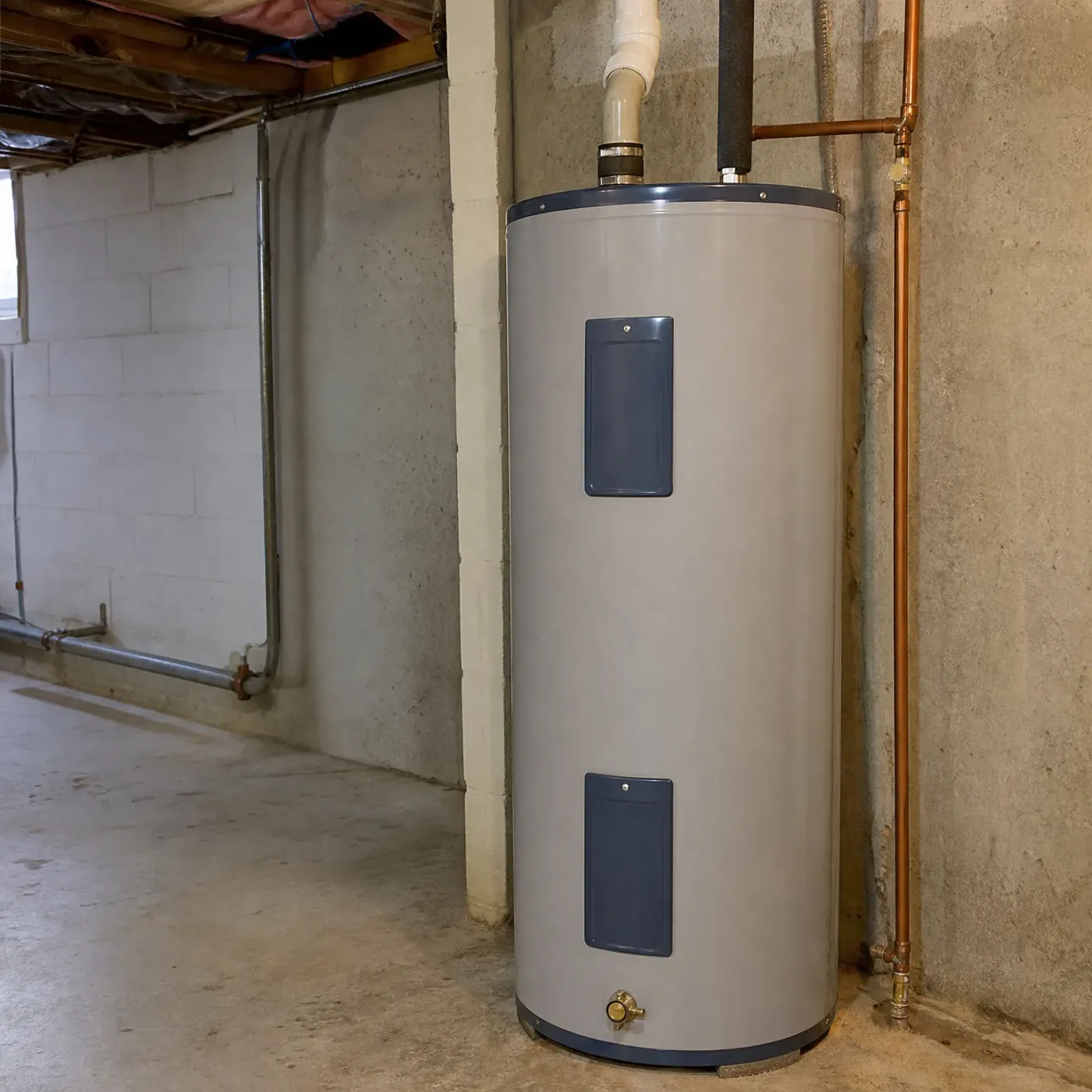
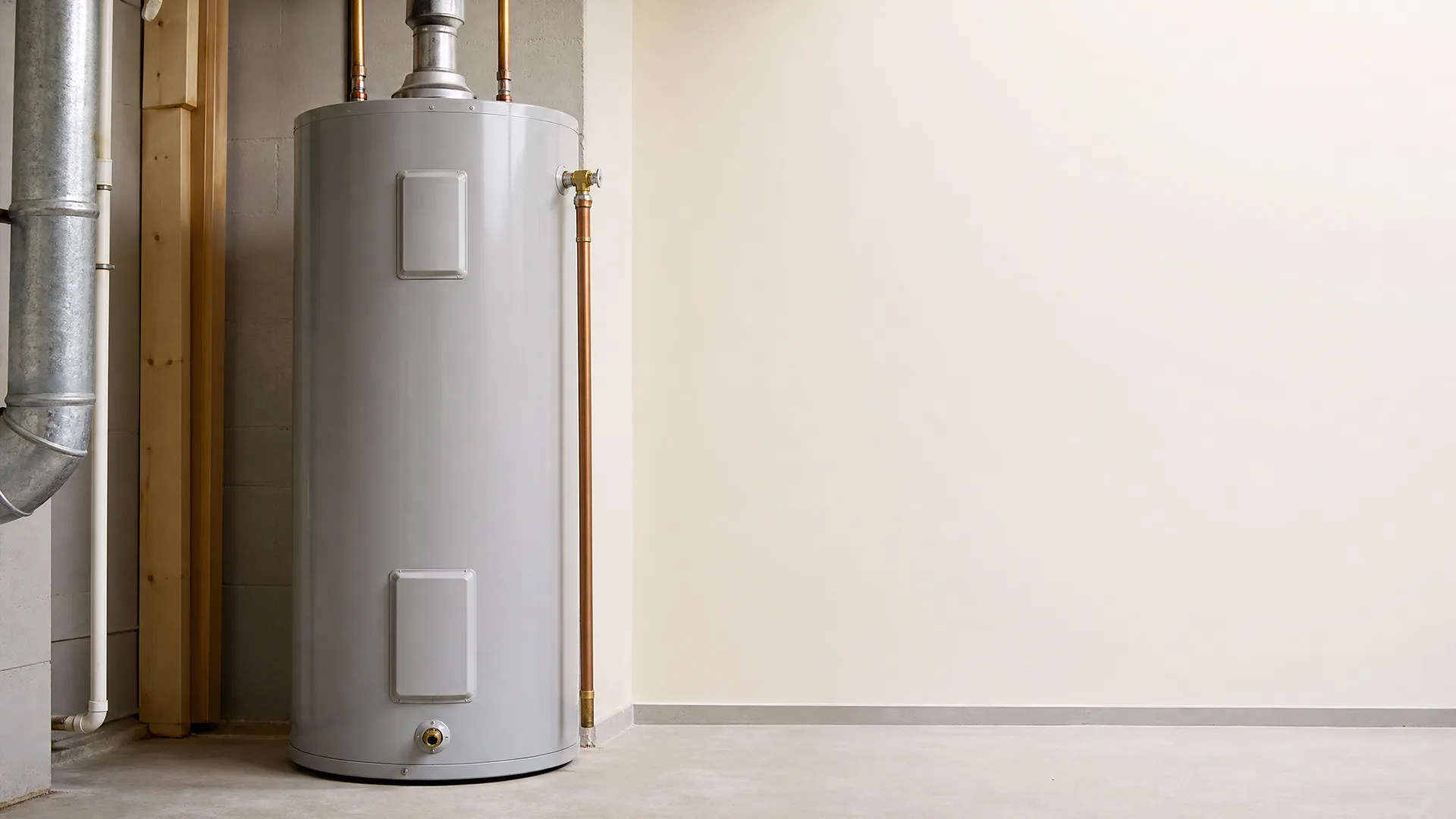
A gray cylindrical water heater with copper pipes stands in a basement corner beside a metal duct and wood framing, next to a plain beige wall and concrete floor.

How it moves heat instead

A heat pump water heater pulls warmth out of the air around it and puts that into your tank. It doesn't burn gas and it doesn't rely on resistance coils the way a standard electric water heater does. Because it's moving heat instead of generating it, it uses a fraction of the electricity for the same hot water. In a state where power costs what it does, that difference shows up on every bill, not just a few.

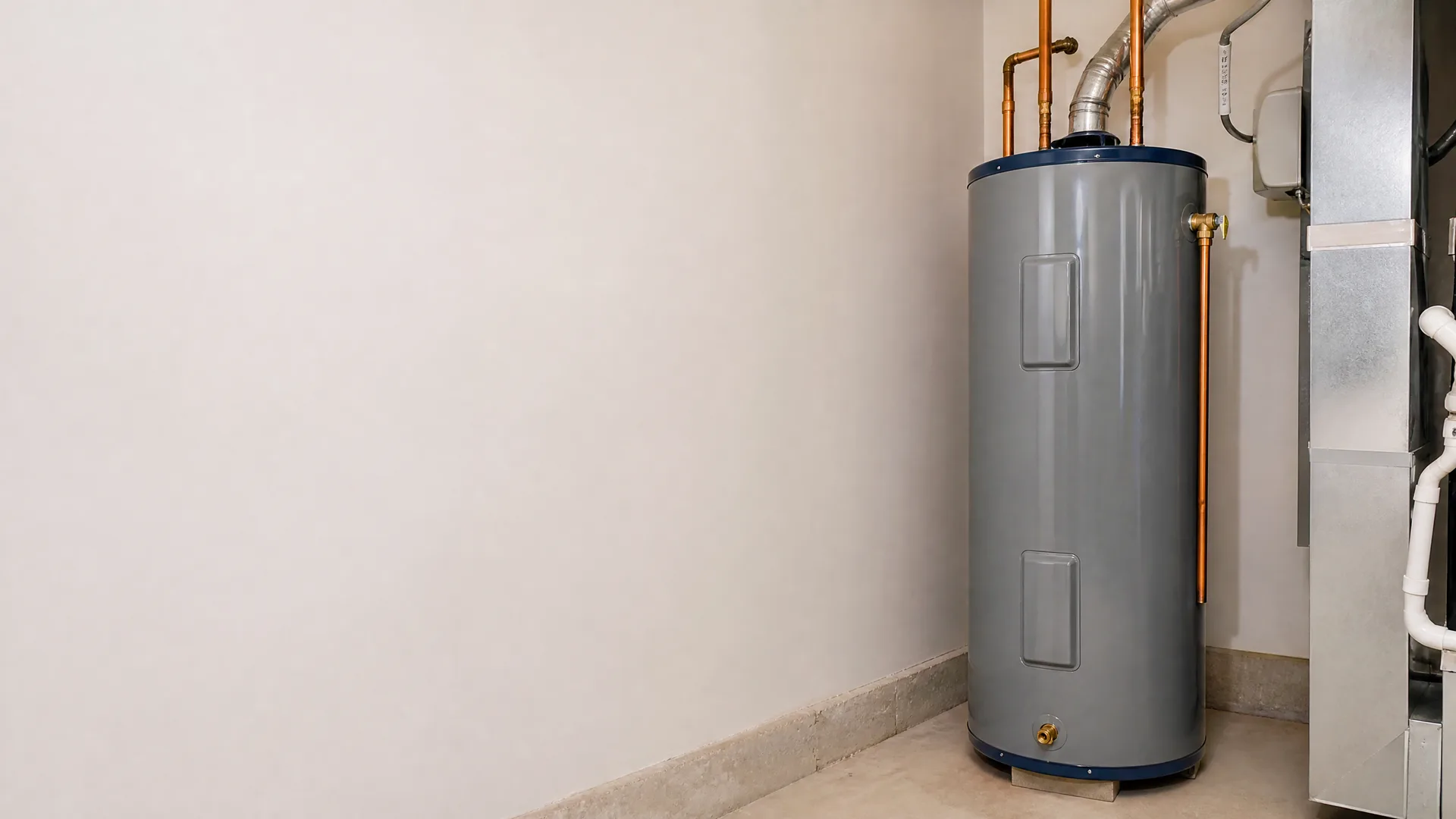
A gray cylindrical water heater with copper pipes stands in a corner of a basement utility room beside metal ductwork and white PVC piping.

What the room around it does

The unit pulls heat and moisture out of the air in the room it sits in, so it also leaves that space a little cooler and drier. In a New York basement that feels damp come July and August, that's a side effect worth knowing about, not a problem to solve. It needs enough air volume around it to draw from, which is why where it goes in the house matters as much as the model itself.

A woman in a cream sweater and jeans stands in the open doorway of a white stucco house, holding the dark door, while a man in a dark quilted jacket seen from behind walks toward the entry past potted plants.

What it changes in your house

Put one in a small utility closet and you'll notice the room around it runs cooler, because that's where the unit is pulling its heat from. In a basement that's fine, maybe even welcome in August. In a tight closet with a door kept shut, the unit has less air to draw on and has to work harder for it. It also needs a drain nearby for condensate, same as your furnace's AC coil does in summer.

If your water heater is electric now and near the end of its life, this is the point where swapping it for a heat pump model actually lowers what you pay to run it, since you're not changing fuels, just how the heat gets made. A licensed local installer who works on these year-round will look at your closet or basement, check the drain and venting, and tell you straight whether your space works for one or needs a change first.

Interior corner with a beige sofa holding a dark green and a light cushion and a textured throw, a potted small-leaved tree beside a white-framed window, and a dark shallow bowl on a wooden coffee table in the foreground.
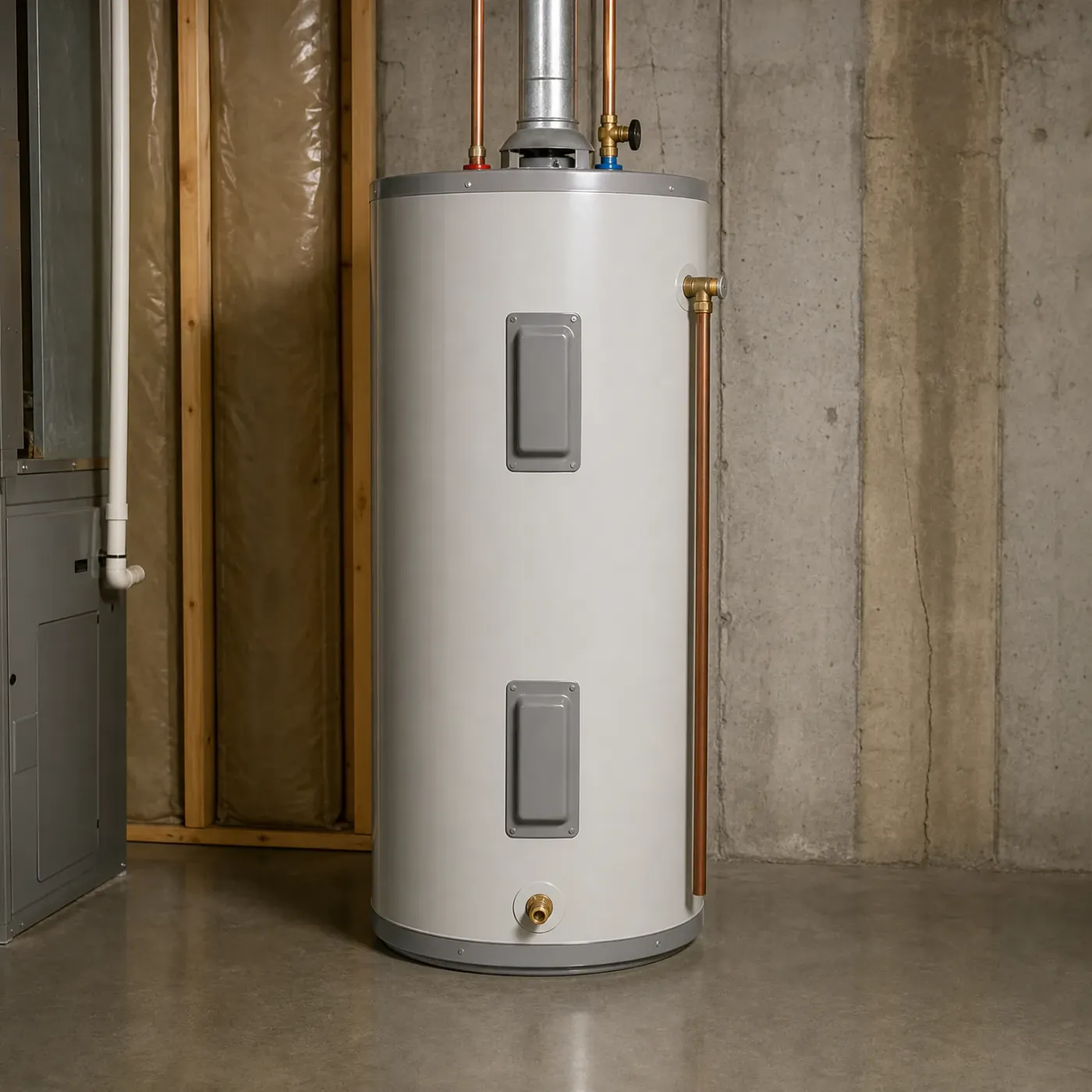
A white cylindrical water heater with two access panels, copper supply pipes and a metal flue, standing on a concrete floor against a concrete wall beside insulated wood framing and a gray electrical panel.

A standard electric tank, doing its job

This is what a working electric water heater looks like: solid panels, clean connections, no sign of rust at the fittings. It'll keep running this way for years, pulling power the whole time to heat that tank with resistance coils.
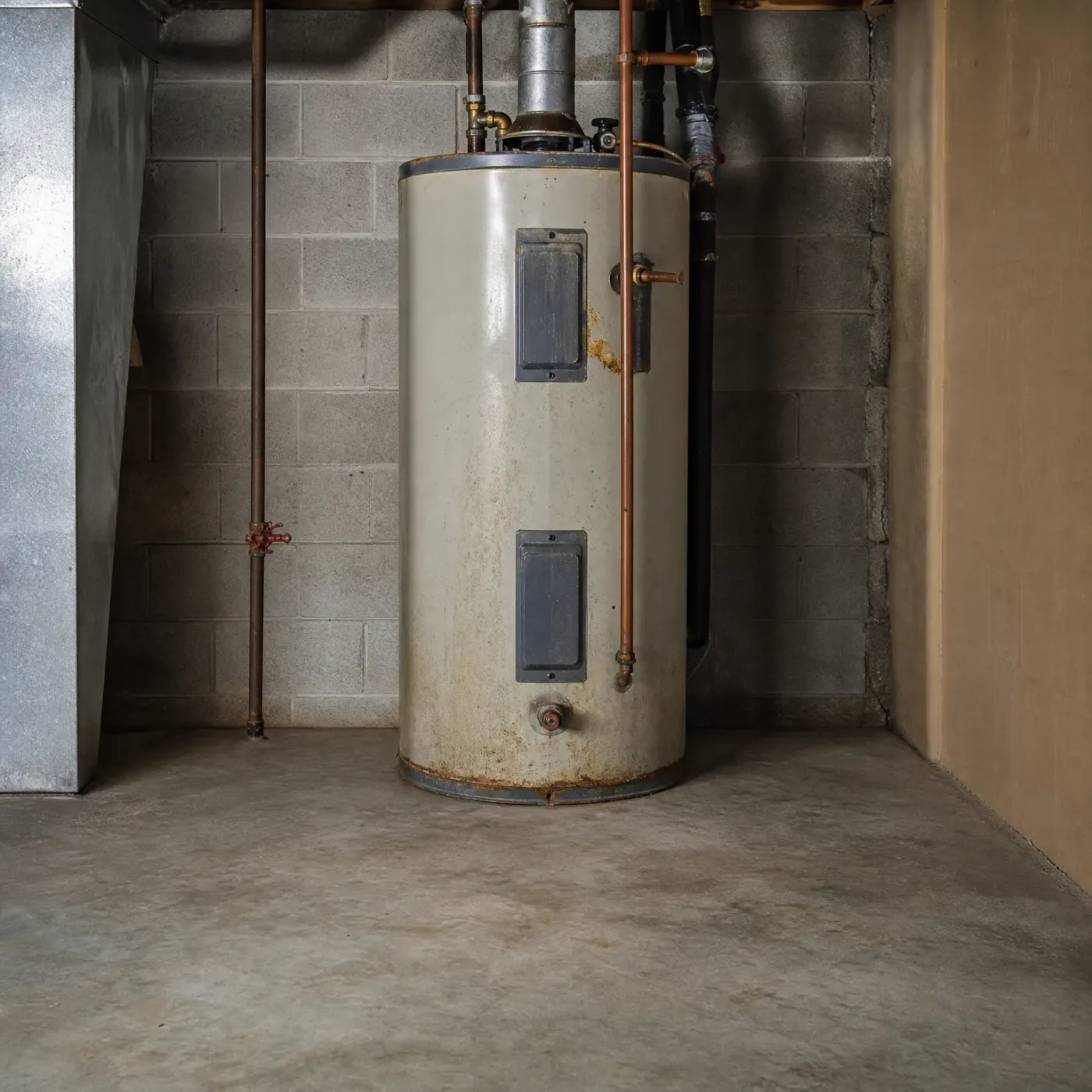

An aging cream-colored water heater with rust streaks and two access panels stands on a concrete floor against a concrete block basement wall, with copper and black pipes running up to the ceiling and a metal duct at left.

The same tank, years later

Rust along the base and around the access panels usually means the tank itself is failing, not just a part inside it. Once you see this, you're not choosing whether to replace it. You're choosing what replaces it.

An older woman with gray hair in a cream knit sweater sits under a blanket on a sofa by a window, looking outside toward yellow-leaved trees, with a lamp, shelves and an armchair in the room behind her.
A gray-haired woman in a chunky knit sweater sits in an armchair with a blanket, looking out a window at yellow autumn foliage, with bookshelves and a potted plant behind her.
A gray-haired woman in a navy sweater sits in an armchair with a knit blanket beside a window, looking out at yellow autumn foliage, with a dining table and houseplant in the room behind her.
A gray-haired woman in a gray cowl-neck sweater sits in an armchair with a blanket, looking out a dark-framed window toward yellow autumn trees.
A tall gray cylindrical water heater stands in a basement corner against concrete block walls, with copper and metal pipes running along the wall and a vent pipe at its top.

Get your water heater to the right pro

One installer gets your project, so there's no bidding war over it.

Get in touch with a local installer about a new water heater.

Request a pro

No charge to send it. You decide if you hire them.

What would change in your own house

If you're still deciding, think about where the tank would actually go. A heat pump water heater needs room to pull air from, so a closet barely big enough for the tank itself isn't a great fit. You'll also hear it: there's a compressor and a fan, more sound than the quiet hum of a standard electric tank. If your current water heater is old enough that you're already planning to replace it, that's the easier moment to switch. Waiting until it fails outright, with water on the floor and no hot water in the house, leaves you choosing in a hurry instead of on your own schedule.

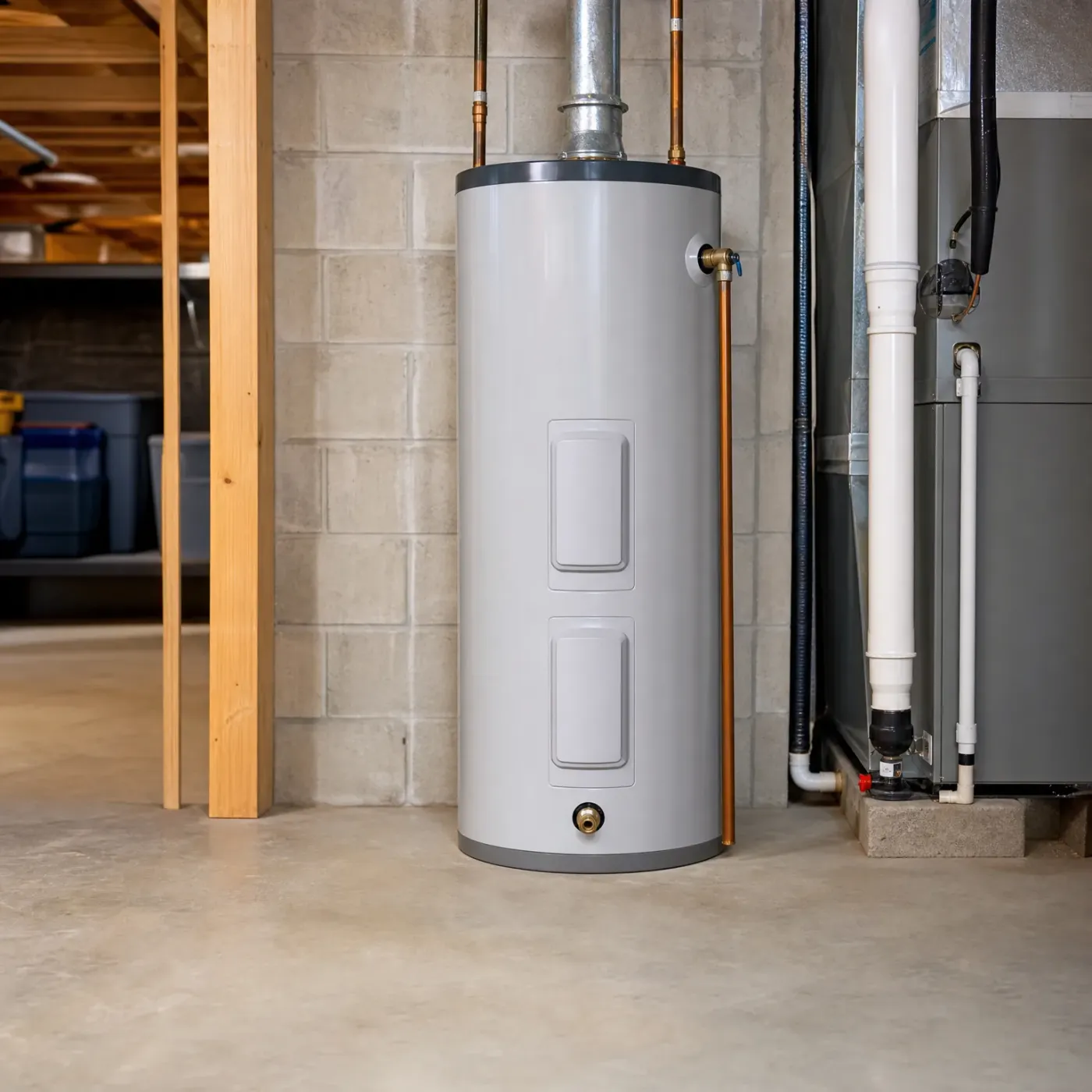
A gray cylindrical water heater with copper pipes stands against a concrete block wall in a basement, next to white PVC piping and a gray furnace, with wood framing and storage bins at left.

Running as it should

This electric tank is doing its job quietly, tucked next to the furnace with clean copper lines and no rust at the fittings. It'll keep heating water with resistance coils for years yet, no change needed. The only question is what it costs you to run every month.

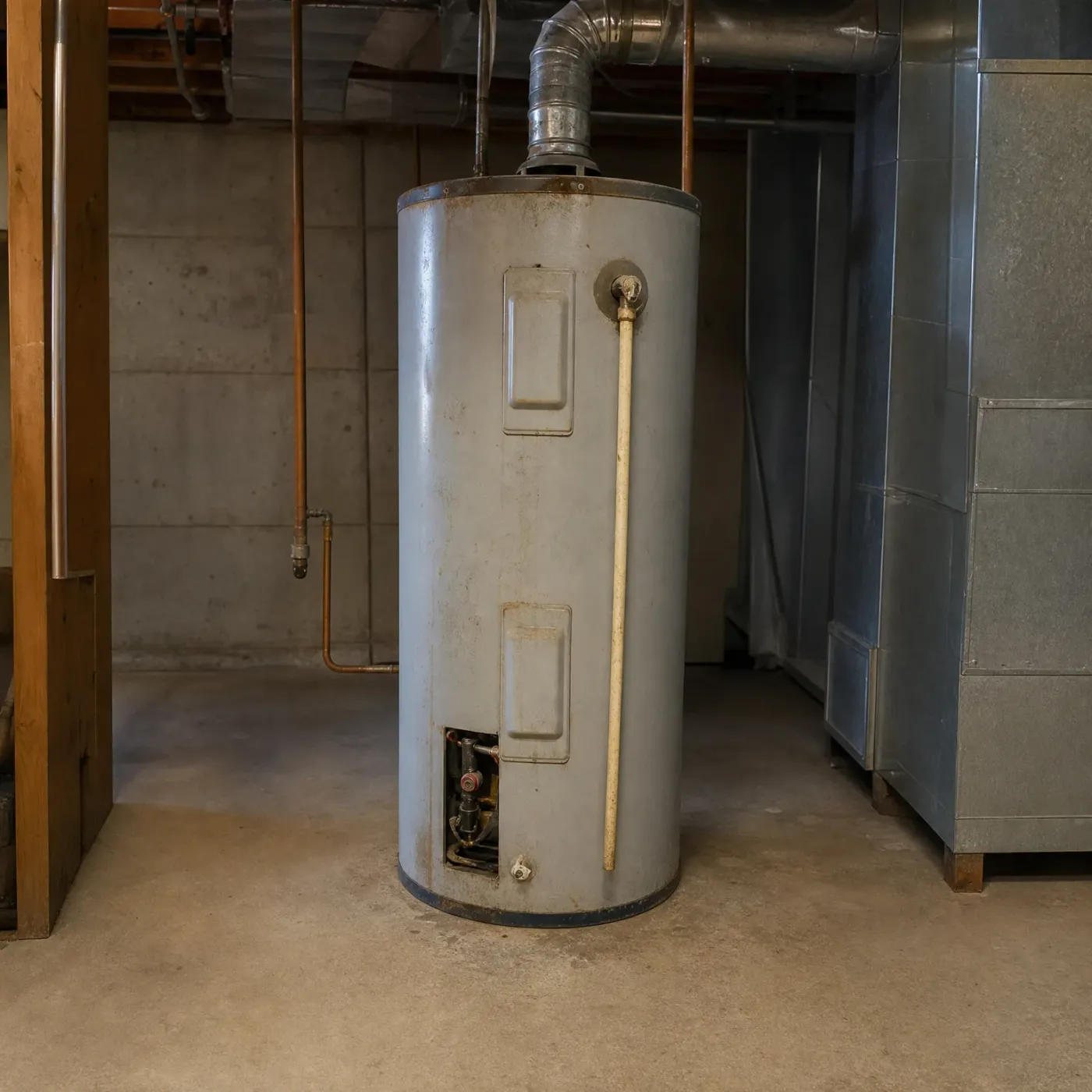
An older gray gas water heater with a metal flue pipe stands on a concrete basement floor beside ductwork and exposed copper piping.

Near the end

Rust has spread across this tank and the relief valve is discharging down the side, signs it's on its way out. When a gas water heater like this fails, you get to pick what replaces it. That's the moment to decide if a heat pump unit belongs in its place.

Heat Pump or Standard Electric Tank

Heat pump water heater

  • Pulls heat from the air instead of generating it, so it uses less electricity to heat the same tank of water.
  • On your power rates, that difference shows up on the bill every month, not just once at installation.
  • Needs a space with enough air around it, roughly the size of a small room, to pull heat from efficiently.
  • Runs with a compressor and a fan, so you'll hear a low hum from the unit, something a standard tank doesn't make.
  • Cools the room it sits in as it operates, which can mean an unheated basement gets a bit colder through a New York winter.
  • Costs more to install than swapping in another standard electric tank, before any savings on the power bill start to offset that.

Standard electric tank

  • Heats water with resistance coils, the same way a toaster or a space heater works, drawing more power to do it.
  • Fits in a tight closet or small utility space without needing room to pull air from.
  • Runs silently aside from the normal sound of water filling the tank.
  • Doesn't cool the room around it, so a small closet or finished space stays at the same temperature.
  • Costs less upfront to install, which matters if you're replacing a tank that failed without warning.
  • Keeps your electric bill higher than it would be with a heat pump unit, given how expensive power is in New York.
A woman in a cream knit sweater sits in an armchair with her eyes closed near a window showing yellow autumn foliage, with a mug on a round wooden side table beside her.
A gray-haired man with a beard in a blue button-placket shirt reclines on a couch with his eyes closed, beside a sunlit window with a green plant.

If your water heater sits in a basement, a heat pump model fits the space and pays you back in a cooler room come August along with a smaller electric bill. Most New York basements have the room and the air volume a heat pump needs to work well.

If it sits in a small closet with a door that stays shut, a standard electric tank is the easier choice. A heat pump needs air moving around it to pull heat from, and a cramped closet won't give it that.

59.1% of homes statewide heat with gas

Most houses in New York heat with gas, which means your water heater is probably the only big electric load tied to that tank. That's exactly where a heat pump water heater makes the biggest dent, since it's not competing with a furnace already running on gas.

ACS 2020-2024 5-year B25040

A heat pump water heater is worth it in New York if you have the space for one and you're currently heating water with electric resistance, which is most of what that tank costs you to run every month. It needs somewhere with air around it, a basement is usually right, a tight closet usually isn't. Beyond that, it comes down to getting one installed by somebody who knows the space it needs and the electrical it calls for, since that's different from swapping in another standard tank. A local contractor who works on these year-round has seen which basements and closets around here actually fit one and which don't, and what tends to go wrong with the install when they don't. When you ask for a match, you're connected with one licensed contractor suited to your situation, not a handful of companies competing for the callback.

Corner of a house with light horizontal lap siding, a white gutter and downspout, and a window, beside a mulched bed with small shrubs, a lawn, wooden fence and trees in the background.
Close-up of a white gutter along an asphalt-shingle roof edge with dry brown leaves collected in it, a downspout and lap siding below, and blurred autumn trees in the background.
Exterior corner of a house with horizontal lap siding above a stone veneer base and a dark-framed window, with ornamental grasses and shrubs in the foreground and trees in low sunlight behind.
A white horizontal-siding house with a steep gray shingled gable roof, fronted by trimmed shrubs, a brick walkway, and a lawn scattered with fallen autumn leaves.
Corner of a house with cream horizontal lap siding, a black-framed window, asphalt shingle roof with dark fascia, white hydrangea blooms and green shrubs below, and a leafy tree and wood fence to the right.

The right pro for this job

The pro who reaches out is licensed in New York.

Get one local pro

There's no charge for the request.