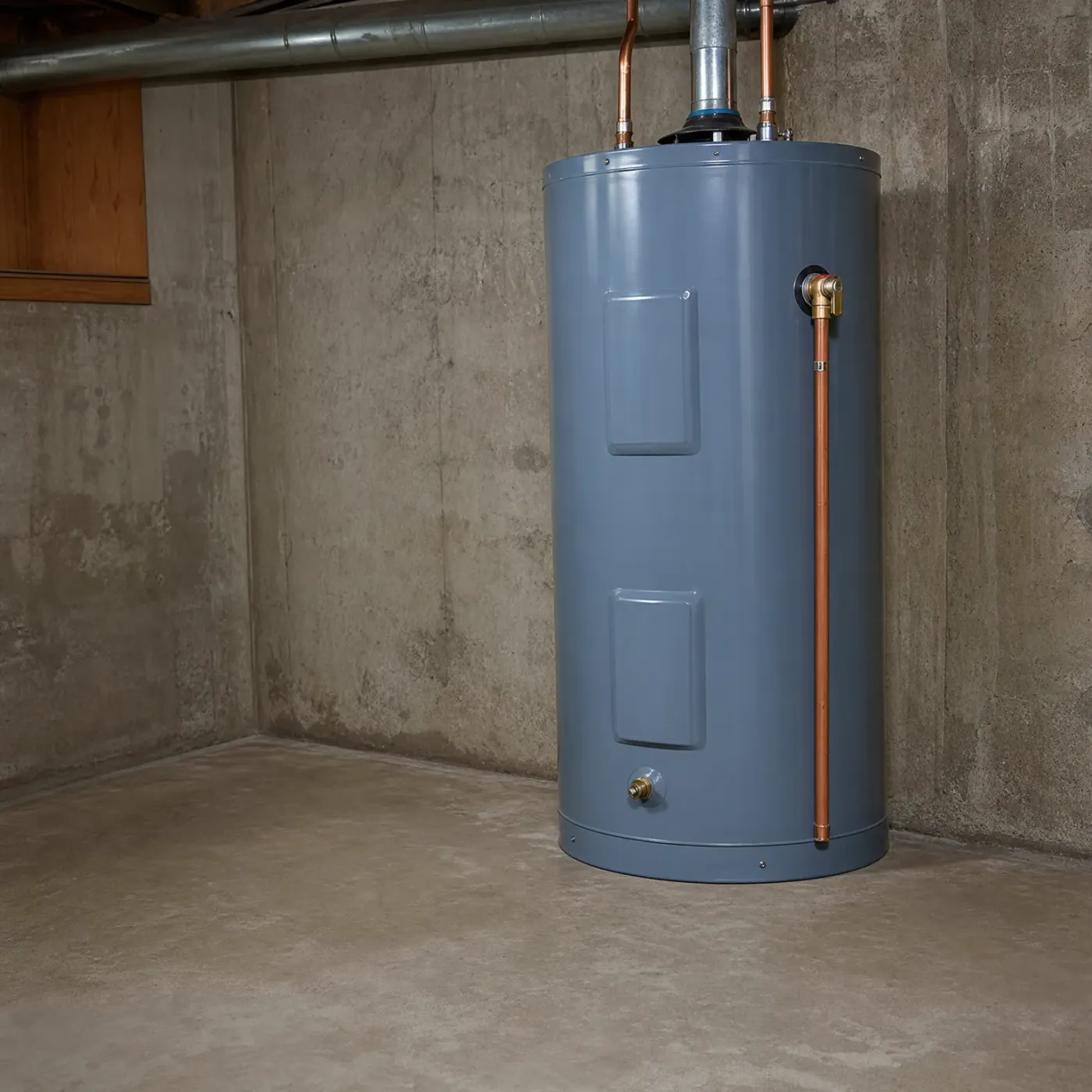
Working as it should
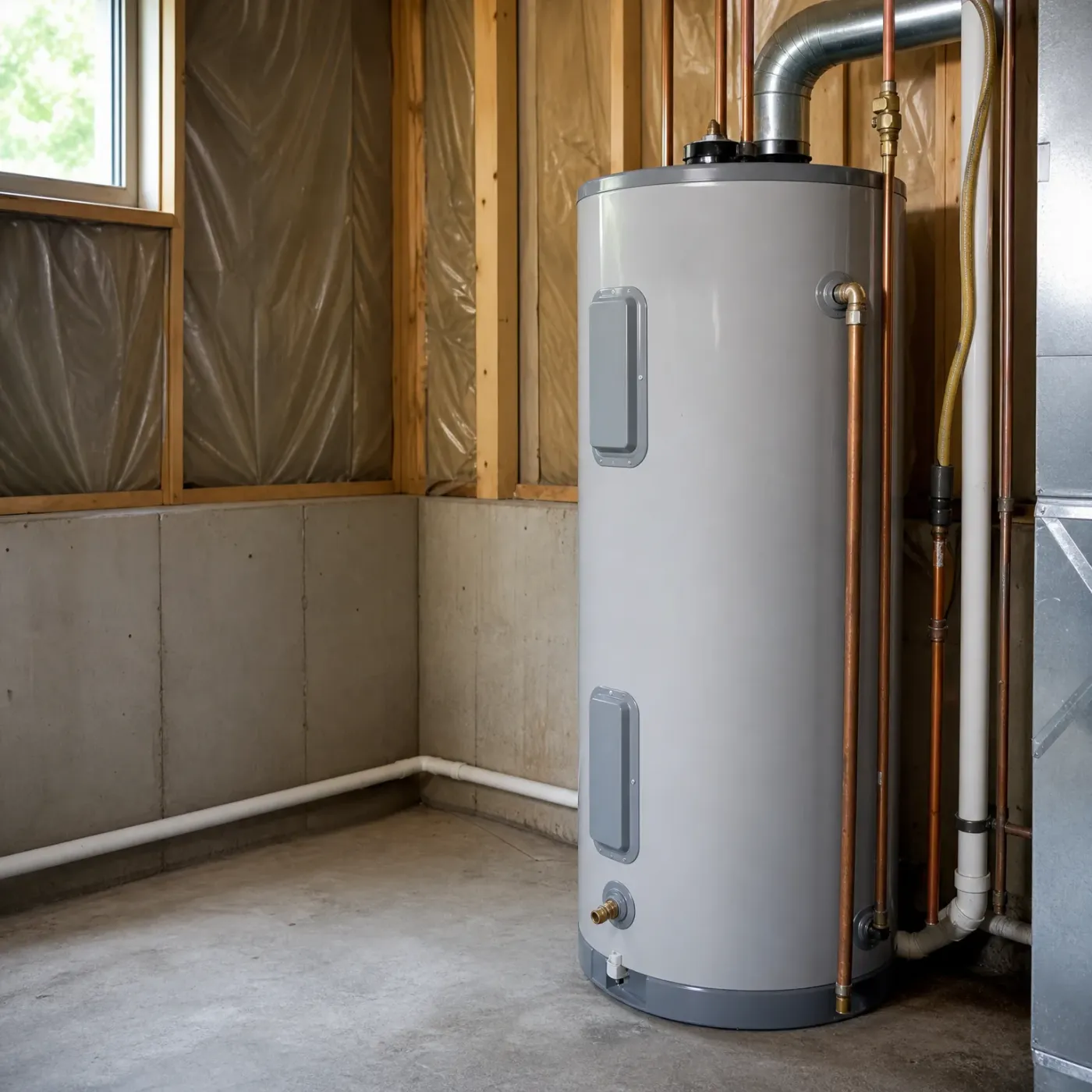
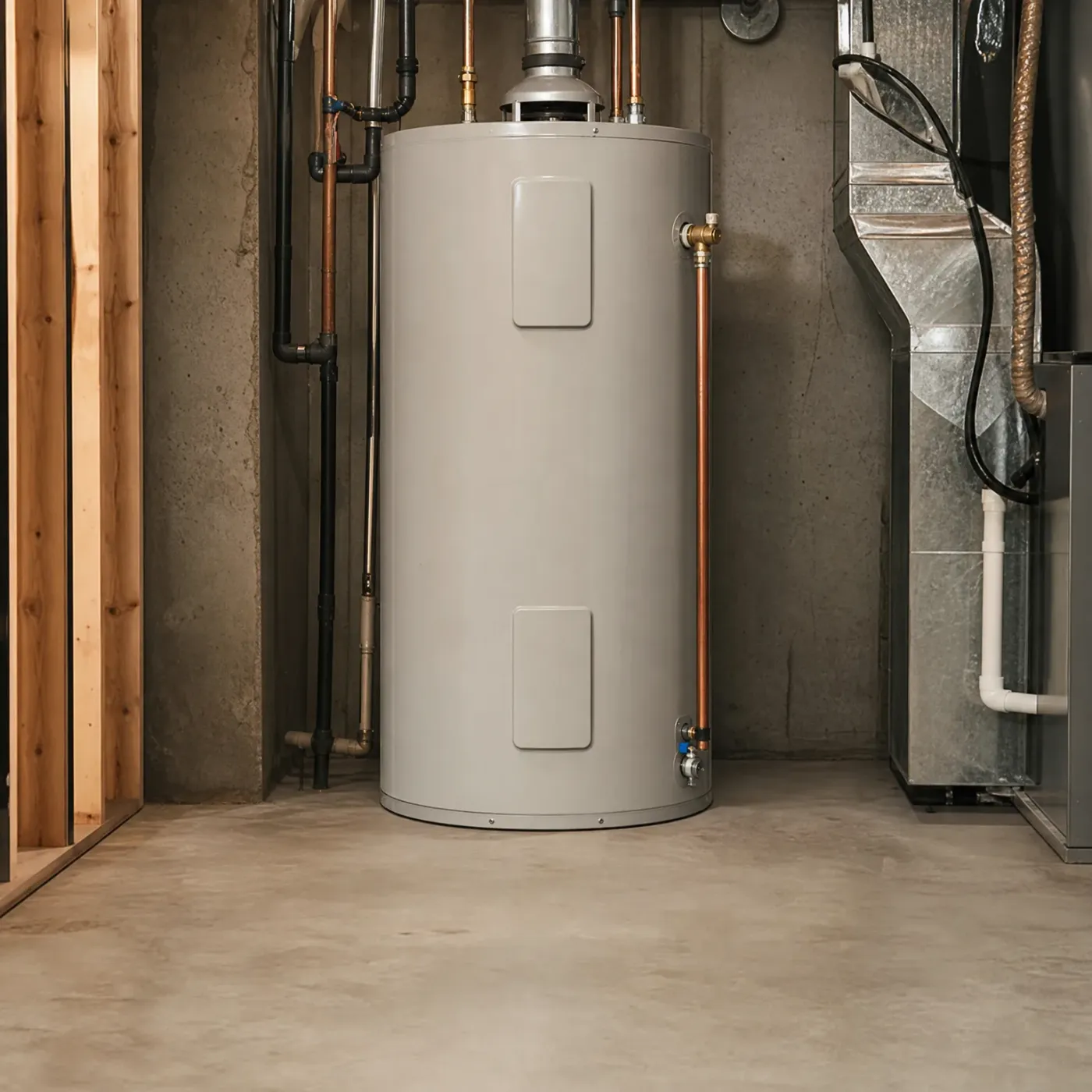
This is what a water heater looks like when it still has years in it. No rust on the tank, no stains on the floor around the base, and the pipes at the top stay dry. The drain valve is tight and the fittings show no buildup.

A water heater that is leaking, rumbling, or running out of hot water sooner than it used to is on its way out. Rumbling means sediment has built up on the bottom of the tank, and that layer makes the burner or element work harder to heat the same water. Rust-colored water, or rust around the fittings, means the tank itself is corroding from the inside, and once that starts it does not stop. A leak at the base almost always means the tank has failed and needs to be replaced, not repaired. Most tank water heaters last about 8 to 12 years, so if yours is in that range and showing any of these signs, it is worth having it looked at rather than waiting for it to fail outright. Since most New York homes run on gas, a failing water heater can also mean a pilot or burner problem specific to a gas unit, which a new unit resolves along with the rest.




A leak at the bottom of the tank almost always means the steel has rusted through from the inside out, and once that happens there's no patching it. A leak higher up, from a fitting or a valve, is a different story, and a plumber can often fix that without touching the tank itself. Inside, an anode rod is doing quiet work, drawing the corrosion to itself instead of the tank walls. Once that rod is used up, the tank is next, and rust spreads faster than most people expect. If a gas water heater takes longer than it used to between showers, the burner may be struggling, or the thermostat is no longer sensing the water temperature right. Rust colored or cloudy water, especially right when you turn on the tap, is the tank telling you the corrosion is already inside, not just in old pipes. Most tanks are built for 8 to 12 years. Past that, replacing it before it fails is usually the better call than waiting for the leak.
You've noticed the shower taking longer to turn hot, or the tank seems to run constantly before it catches up. It used to be quicker, and now you're standing there waiting. That change didn't happen overnight, and it usually points to something specific going on inside the tank rather than just the unit getting older in some vague way.
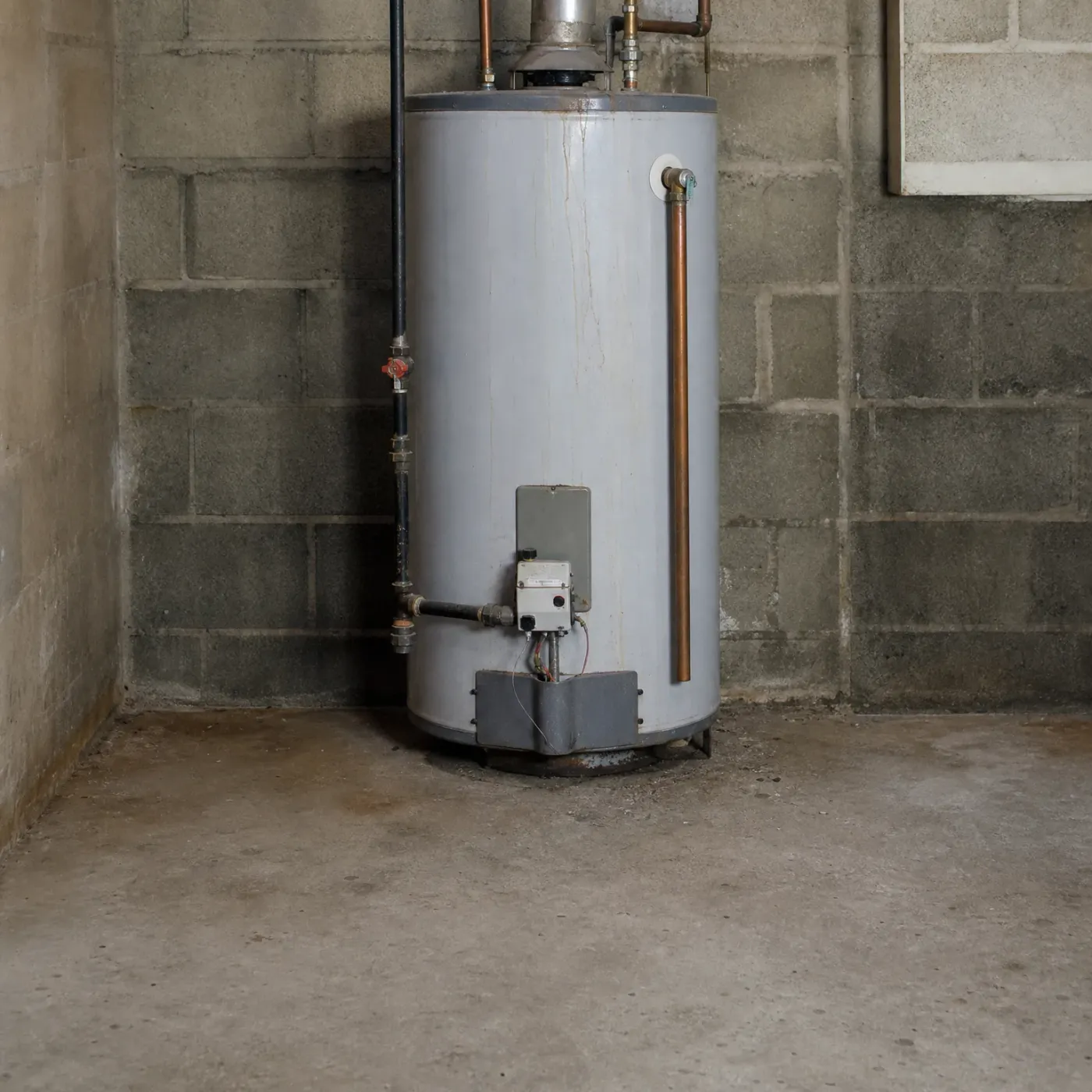
Minerals in the water settle to the bottom of the tank over time, and gas burners sit right underneath that layer. The burner has to heat through the sediment before the heat reaches the water above it, so recovery between uses gets slower and slower. On an electric water heater, the lower element can get coated the same way and struggles to do its job. New York's water leaves deposits like this in most tanks eventually. Once the layer is thick enough, a plumber can sometimes flush it out and get some recovery time back, but a tank that has been labored for a while like this is usually closer to needing replacement than another flush.
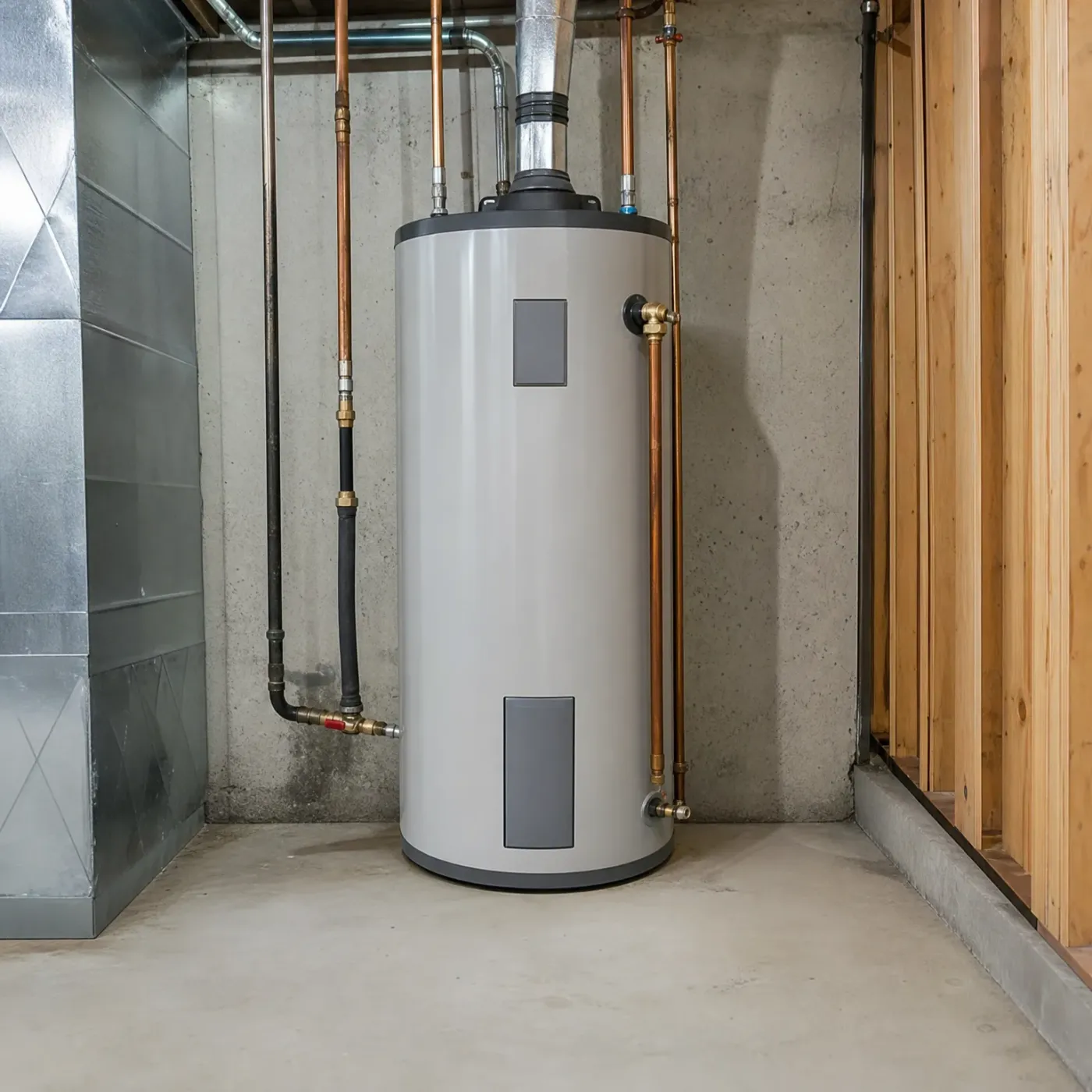
This is what a water heater looks like when it still has years in it. No rust on the tank, no stains on the floor around the base, and the pipes at the top stay dry. The drain valve is tight and the fittings show no buildup.
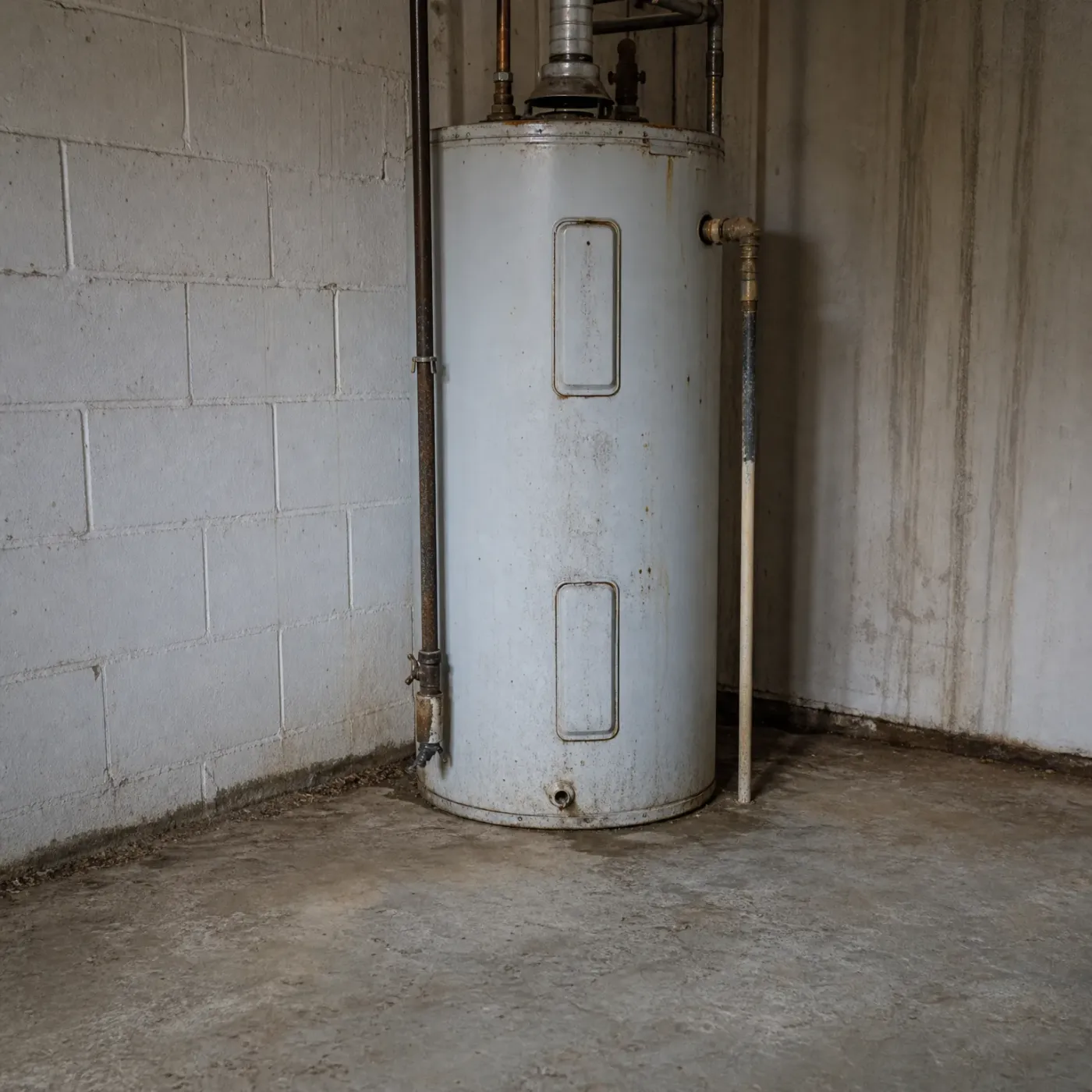
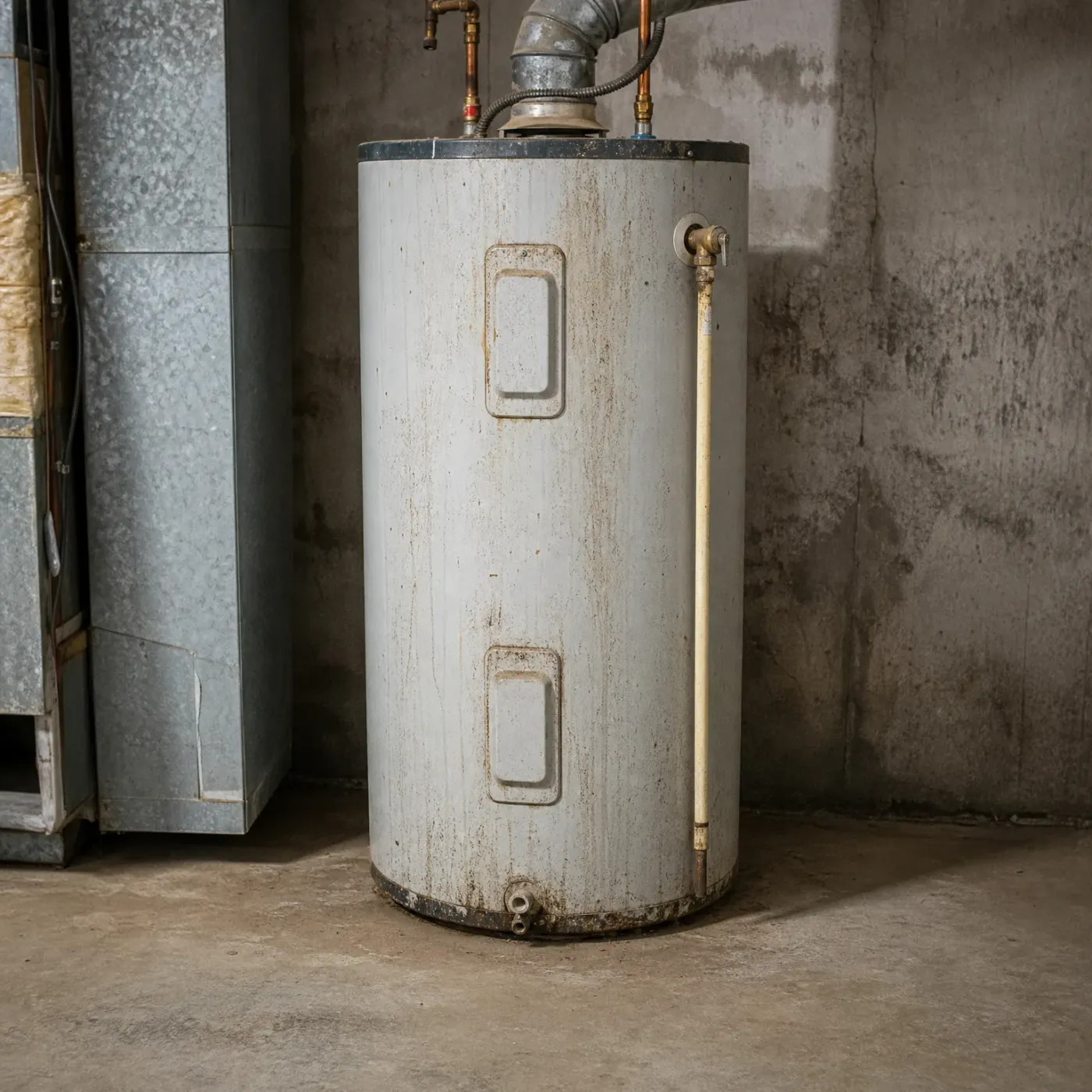
Rust like this on the tank means the steel underneath is failing, not just the finish. Once corrosion reaches this point it spreads, and a tank in this shape is a matter of when, not if. If yours looks like this, replacement is the honest answer, not another repair.


Your request goes to one pro, not a list of companies.
Send the request and finding a pro stops being your problem.
There's no charge for the request.
A tank water heater in New York typically lasts somewhere around 8 to 12 years. Once it passes that point, the anode rod inside has usually given up protecting the tank, and the steel is exposed to corrosion with nothing slowing it down. If your unit came with the house and you don't know its age, check the label on the side for a manufacture date or serial number. A water heater pushing past 10 years old and showing any of the signs above isn't a candidate for another repair. At that age, a plumber is more likely to recommend replacing it outright than patching whatever failed this time.
Most homes in New York heat water with gas, and a gas water heater gives its own warning before it fails. A pilot light that won't stay lit, or a burner flame that burns yellow instead of blue, points to a venting or combustion problem, not something to ignore. Soot around the burner access panel is another sign the unit isn't burning fuel cleanly anymore. These aren't the same symptoms as the rumbling or leaking already mentioned, but they carry the same weight. A gas water heater acting this way needs a plumber's attention regardless of its age, since a combustion problem affects more than how fast you get hot water.
If your house runs on gas like most homes in New York, your water heater probably does too, with a pilot or igniter that lights the burner under the tank. That burner is what sediment buildup makes work harder, and it's usually the first part to show wear once the tank starts to go.
ACS 2020-2024 5-year B25040
Rust in the water, a tank that's leaking, or hot water that runs out faster than it used to all point the same direction. Add in the age of the thing. Once a water heater in New York passes 10 to 12 years, the anode rod has usually stopped protecting the tank, and from there it's just a matter of time before the steel gives out. None of these signs get better on their own. A tank that rumbles now will rumble louder next month, and a slow leak doesn't stay slow. The homeowners who end up with water damage are almost always the ones who waited through a sign they'd already noticed, hoping it would hold through another season.
You don't have to sort through options to get this handled. A local plumber who installs water heaters in New York homes every week already knows which tanks and sizes hold up against the water here, and has seen which brands fail early and which ones don't. That's not something you have to explain when they show up. One licensed local contractor means one person who knows the equipment, not a handful of companies competing for your call. If your water heater is showing any of the signs above, the age alone is reason enough to stop waiting on it.
One installer gets your project, so there's no bidding war over it.
You only hire the pro if you want to.