


140,000 BTU
That's what a typical gas tankless unit draws to heat water on demand. Your existing gas line may not be sized for it, which is why a plumber checks that first.
A local installer who puts in water heaters gets your project.
Get matchedYou're due for a new water heater, or just thinking ahead, and you keep seeing tankless units advertised as the upgrade everyone's making. But your New York home already has gas and a setup that works, and you want to know if switching actually makes sense here or if a standard tank is still the better call for a house like yours.
A gas tank water heater is the simpler install if your home already has one, since the gas line and venting are already in place. A tankless unit runs on demand, so you never run out of hot water, and it uses less gas over a year because it's not keeping forty gallons warm around the clock. But tankless installation in an existing New York home often means upgrading the gas line or venting to match what the unit needs, which a tank swap doesn't require. If your house has a big family or long showers back to back, tankless solves that. If not, a tank heats water just as reliably for less upfront work.
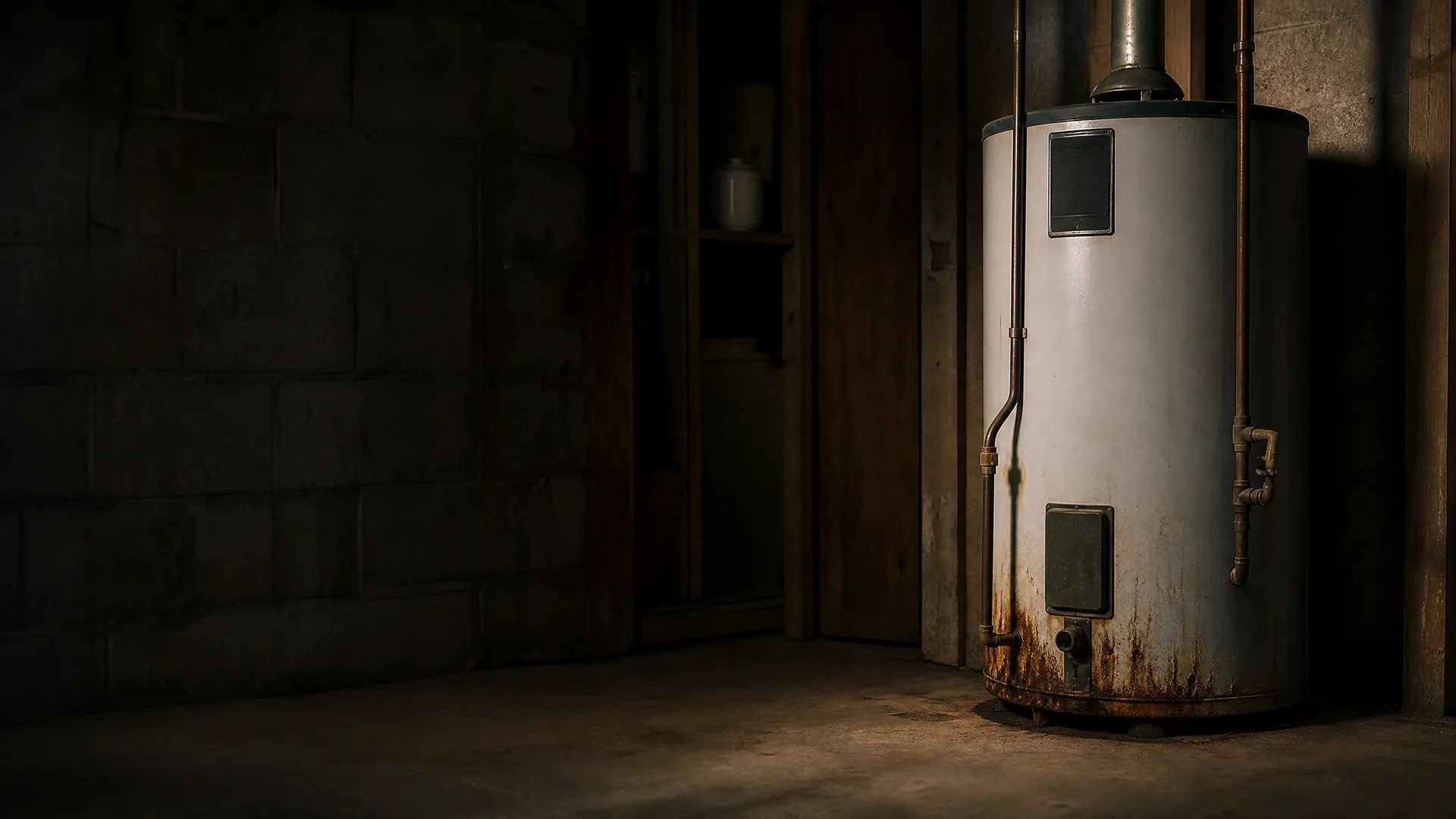
You go down to the utility room after dinner to grab something from the shelf, and the overhead bulb catches it before you're even thinking about it: a rust-colored streak running down the side of the tank, pooling faintly where the floor meets the base. The heater's been humming along for years without a complaint, so it takes you a second to place what you're looking at. You crouch down, touch the streak, and it's damp. Outside, the evening is quiet, the kind of night where you'd rather not be thinking about this at all. You stand there a minute, working out how long it's been since you last looked.
A plumber checks your gas line and vent size against the new unit's demand
The old tank gets drained and disconnected from water and gas lines
A tankless unit mounts to the wall near the existing gas and vent lines
The water lines, gas line, and vent connect to the new unit




That's what a typical gas tankless unit draws to heat water on demand. Your existing gas line may not be sized for it, which is why a plumber checks that first.
That's the draw of a standard electric tank heater's heating element. With New York electric rates among the highest around, a gas tank often costs less to run.


You've read the comparison and you have a sense of which way you're leaning, but the real answer depends on what's already running to your water heater now, the size of your gas line, where the vent goes, and whether your home can take a tankless unit without rework. That's not something to guess at from a search page. A plumber who looks at your setup in person can tell you in a few minutes whether tankless is a straightforward swap or a bigger job than it's worth, and whether a tank still makes the most sense for your household. Getting that answer yourself means calling around, explaining your setup to each plumber, and sitting with quotes that don't line up because nobody looked at the same thing. Handing this off gets you a plumber who already knows what you're deciding between and can tell you what your home actually needs, instead of you running down that list by yourself while the rust spreads or the hot water runs out mid-shower.
A tank works the way its name suggests. It keeps 40 or 50 gallons hot all the time, so the burner underneath cycles on whenever the water inside drops a few degrees from sitting there. That cycling is constant, day and night, whether anyone's home or not, because the tank is always losing a little heat through its walls. A tankless unit skips that entirely. It sits idle until a flow sensor inside detects water moving through the line, then the burner fires and the heat exchanger brings that water up to temperature as it passes through. Nothing stays hot in reserve. That's where the gas savings come from, but it's also why a tankless unit has a minimum flow rate it needs to see before it'll kick on at all. A faucet trickling along slowly sometimes won't trigger it, where a tank has no such threshold since the hot water's already sitting there waiting.
Venting is where the two part ways on what your home needs physically. A tank usually vents through whatever flue is already in place, often shared with a furnace. A tankless unit typically needs its own vent, run through the wall or up through the roof, sized to that specific unit. And recovery works differently too. A tank's limit is its burner size and how many gallons it's holding. A tankless unit's limit is how much gas your line can actually deliver in the moment, which is a different number for every house.
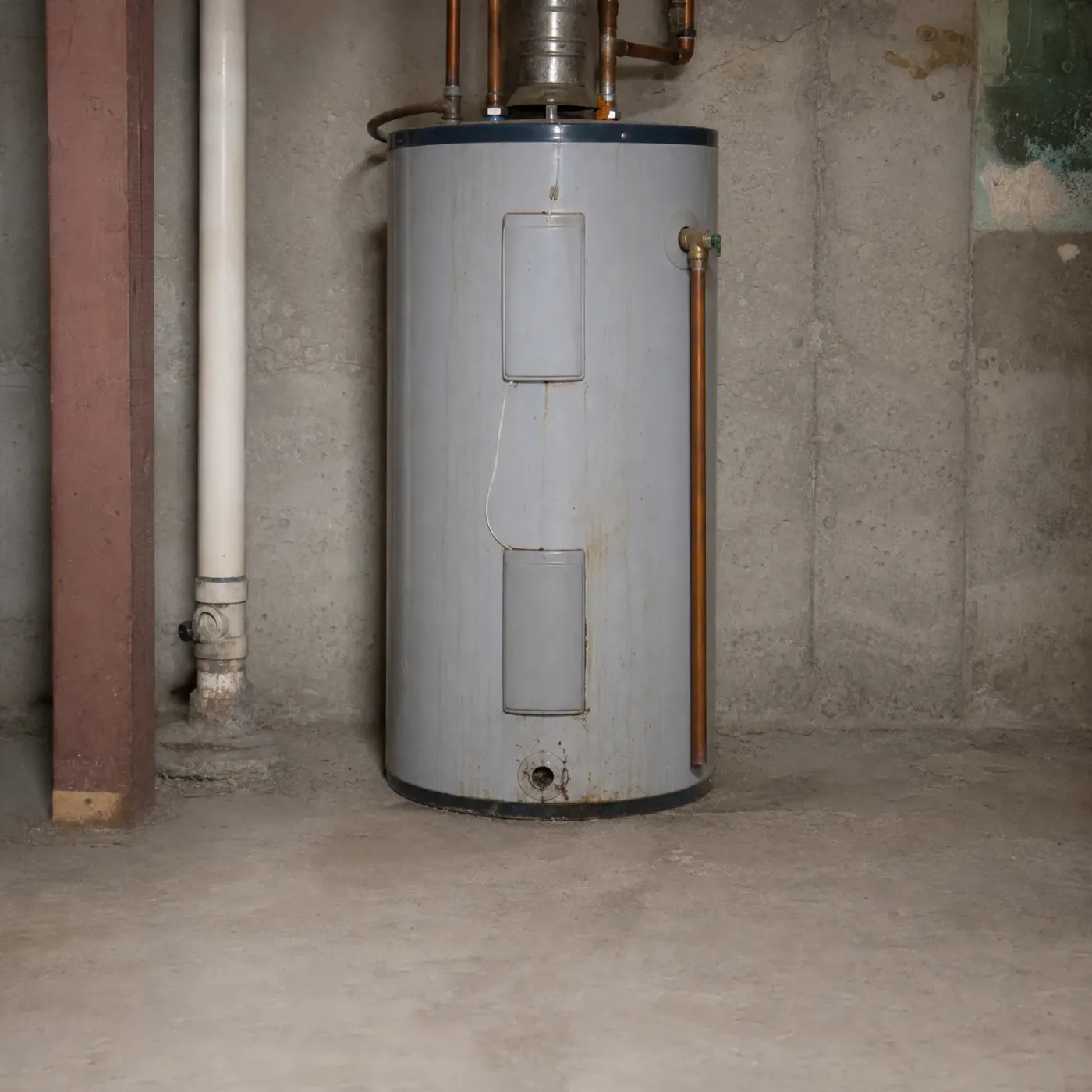
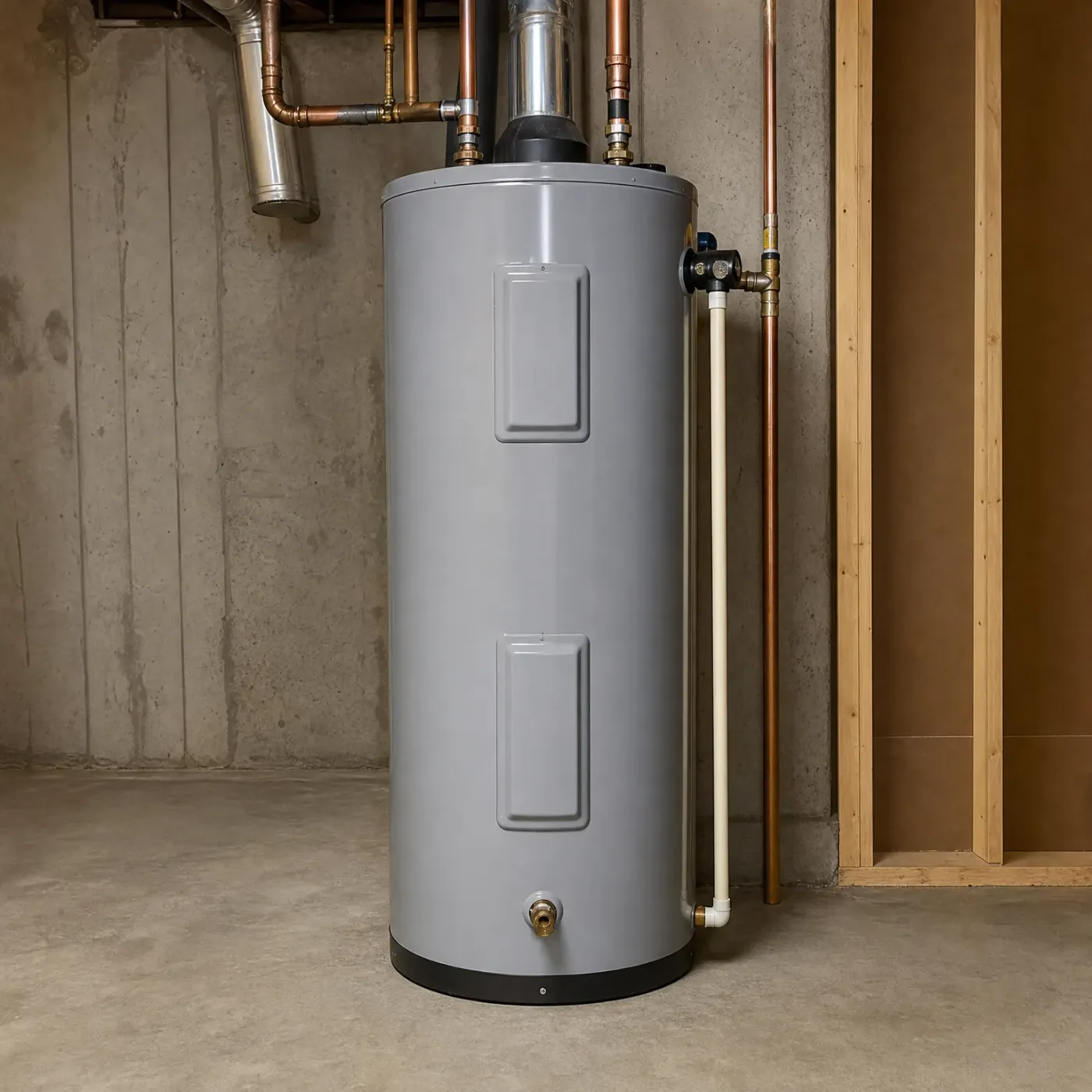
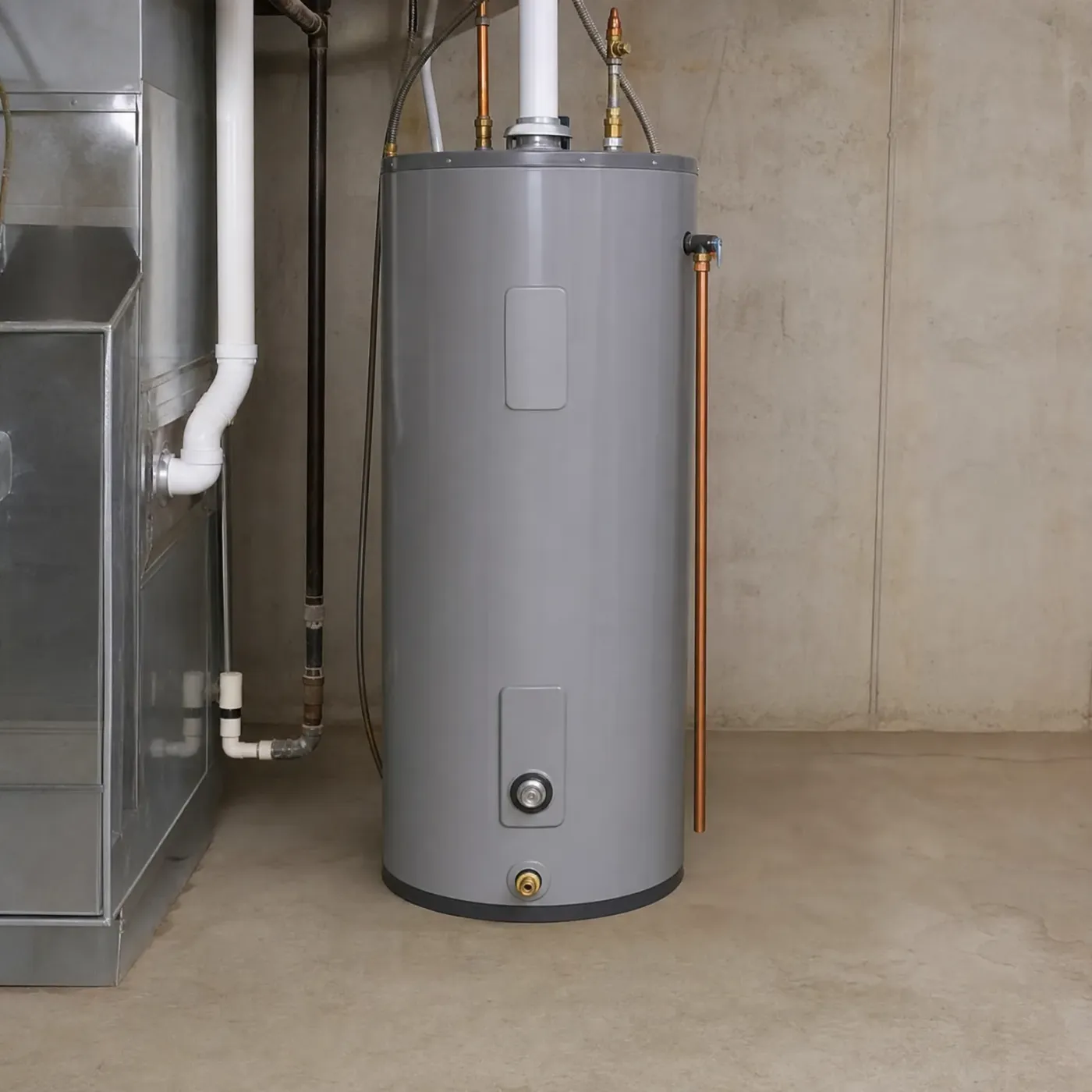
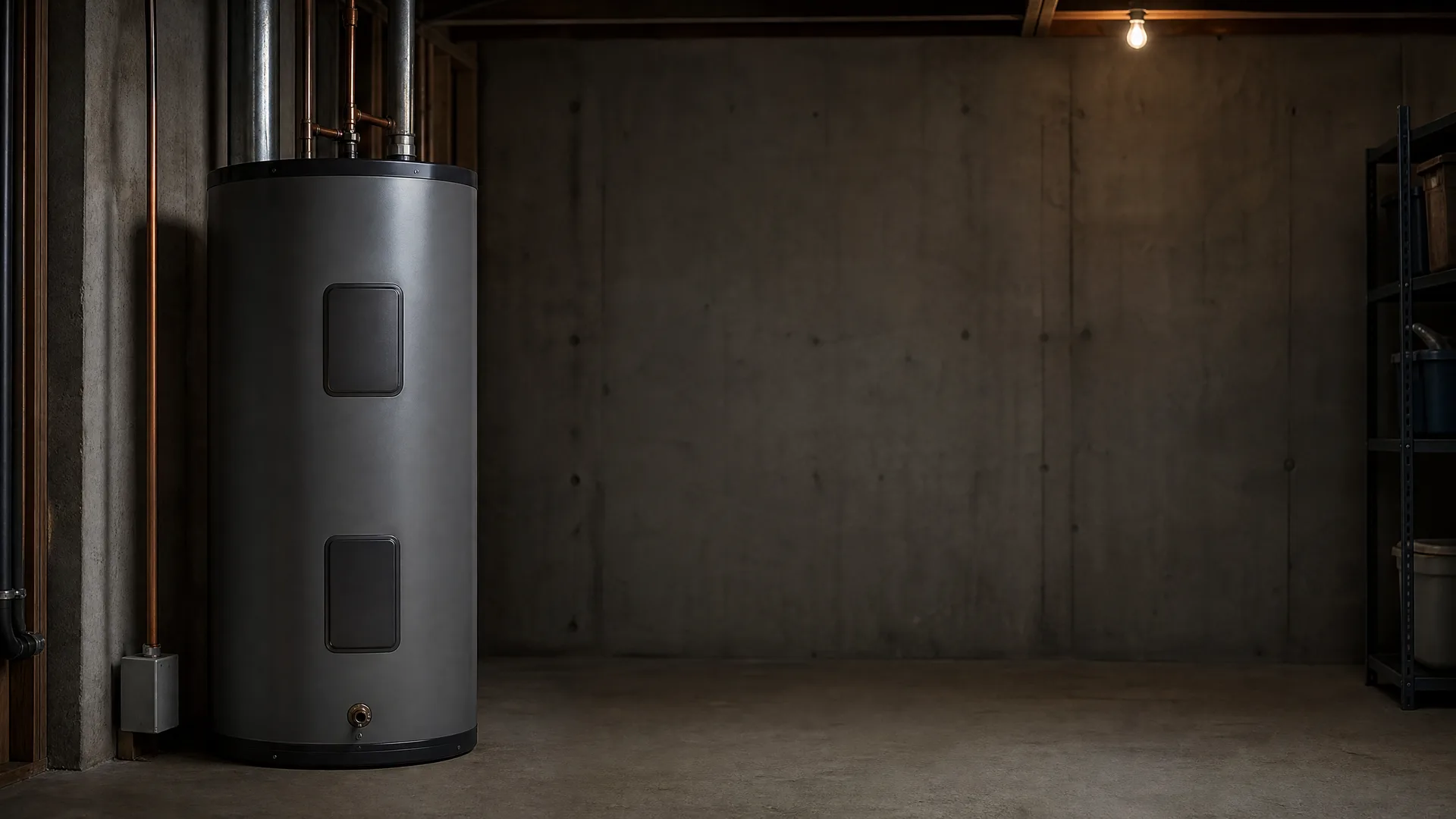
This is what a working tank looks like: upright, connected to its water lines and a copper relief pipe, with a drain valve at the base. No rust, no pooling. If yours still looks like this, you're just maintaining it, not replacing it.
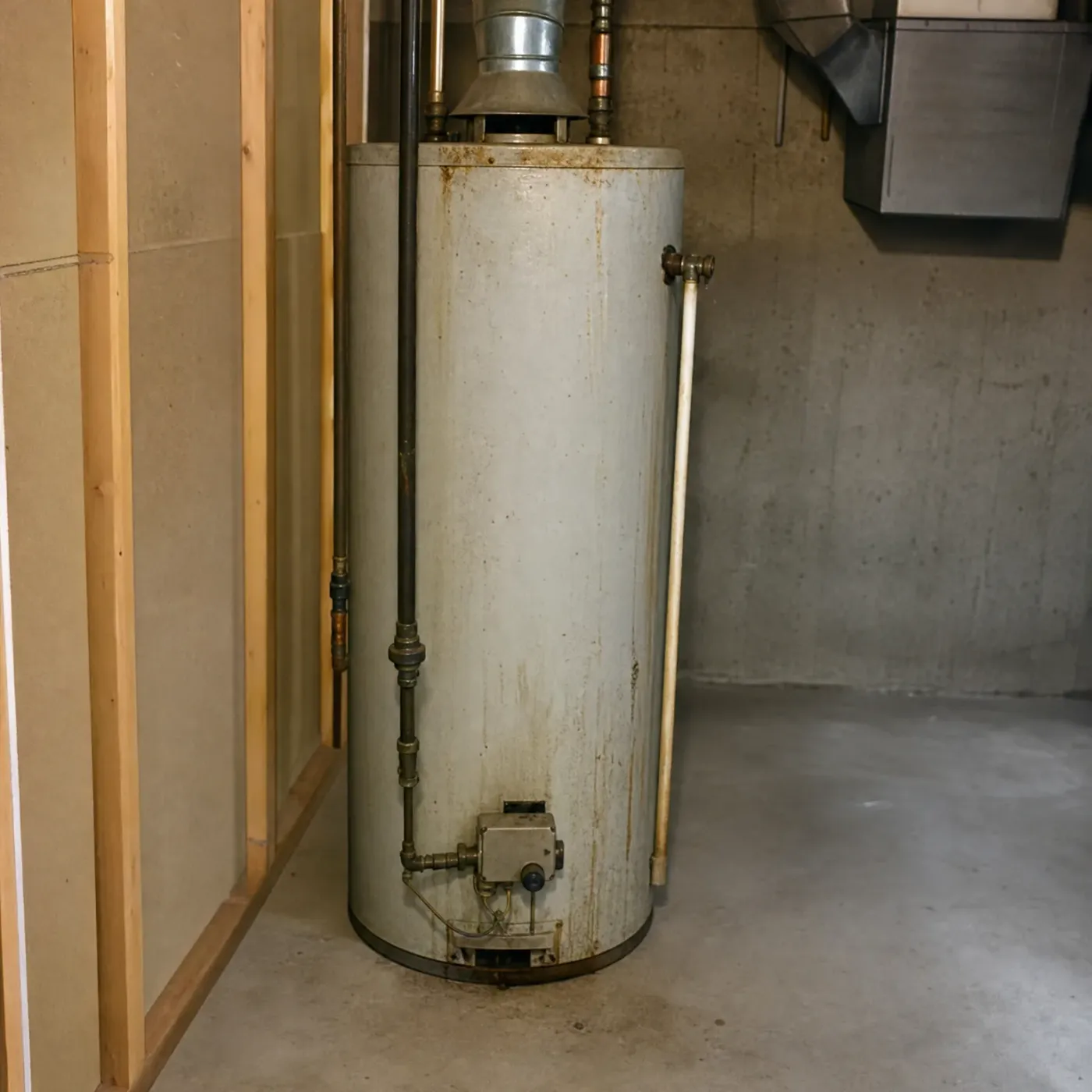
Rust across the jacket, corrosion around the gas valve and flue connection. Once a tank looks like this, the question isn't whether to replace it, it's whether to put in the same kind of tank again or switch to tankless while the old lines are already disconnected.
Most houses in New York run on gas, same as yours, and that's exactly why a gas tankless unit is even worth weighing. Without that gas line already in place, a plumber would be pricing out electric service upgrades instead, and the comparison would look nothing like this.
ACS 2020-2024 5-year B25040
A tank costs less to put in and gets you back to a full shower faster when the house is busy. A tankless unit costs more up front and asks more of your gas line and vent, but it keeps running hot water as long as you need it and skips the standing pilot losses a tank runs all day. Neither one is wrong for your New York home. What decides it is the gas line sizing, the vent run, and the space where the unit goes, and that's not something to guess at from a comparison chart. Instead of calling around to plumbers, explaining your setup over and over, and sorting through quotes that all assume different things about your house, you can get matched with a plumber who looks at what's actually running to your water heater now and tells you straight which one makes sense. You already know your water heater needs replacing. What's left is figuring out which one to put in its place, and that's a five-minute look at your setup, not a guess.
Skip collecting and comparing quotes for the new water heater.