Tell us about the job
Takes about a minute. No obligation.
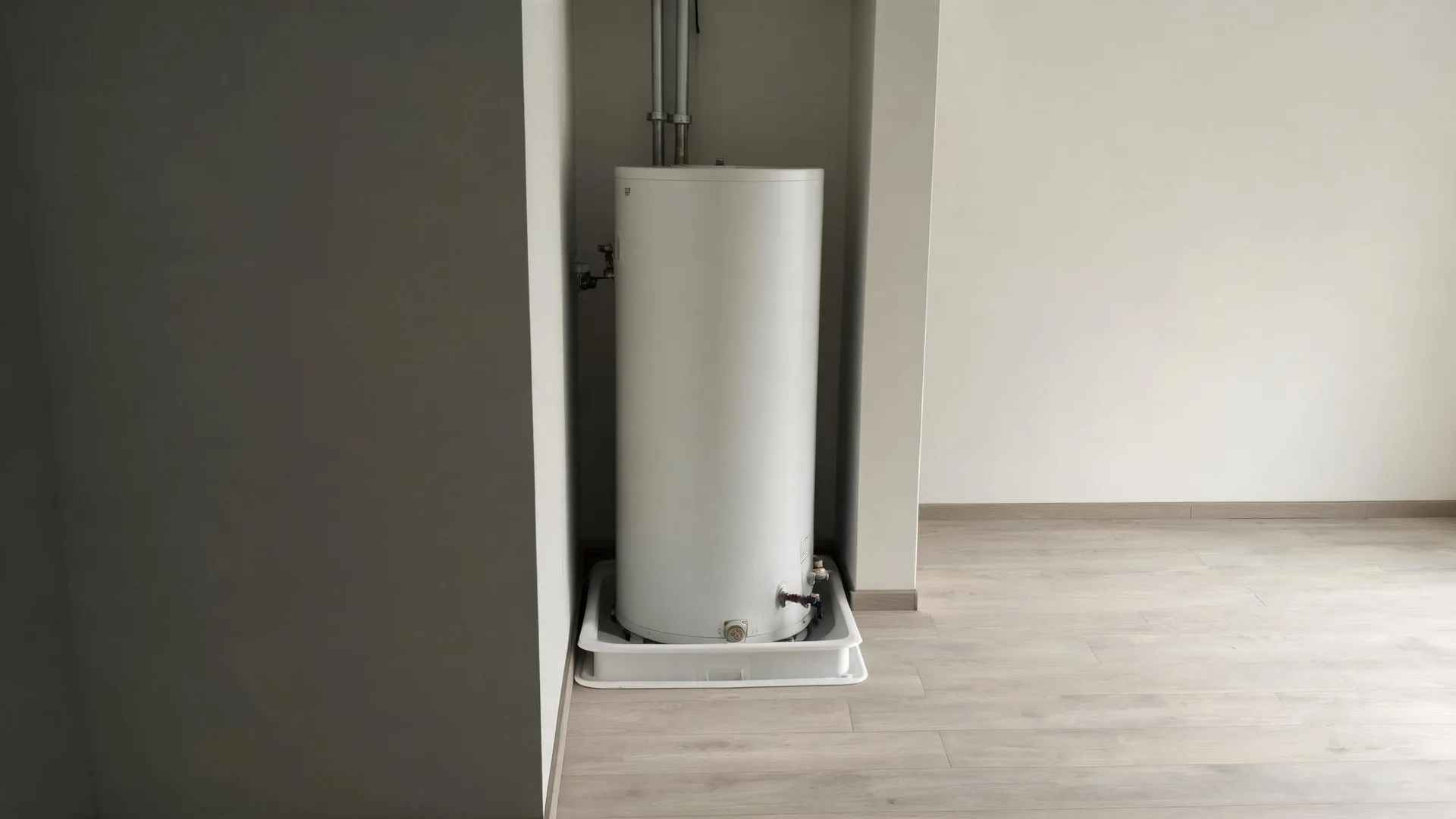
Gas-fired water heaters run combustion air and venting requirements that vary by installation type, and getting those wrong means the equipment either underperforms or fails an inspection. Utility gas heats more occupied homes in Rockland County, New York than any other fuel, at 84.2% (2020-2024 ACS 5-year). A contractor quoting a replacement here starts by reading the existing flue, the draft hood, and whether the space around the unit supplies enough air for clean combustion. A direct-vent unit and an atmospherically vented one are not interchangeable in the same chase, so the install decision is made by what the house already has, not by what is cheapest on the shelf.
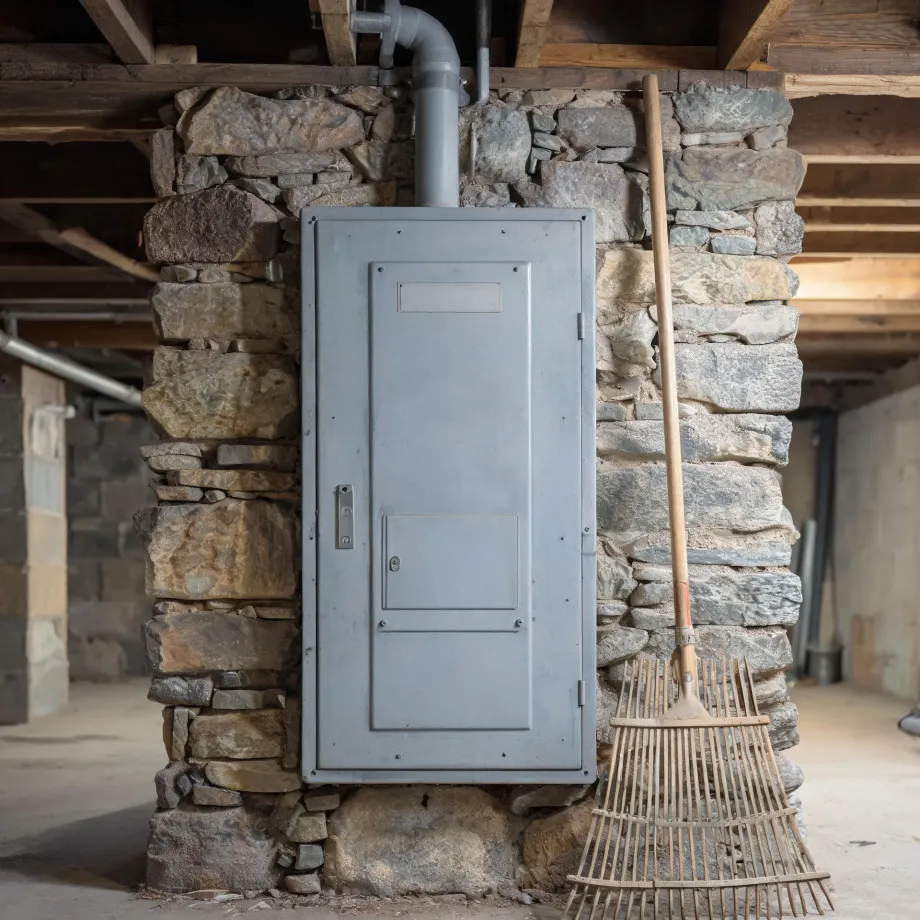
Ductwork laid down for one generation of equipment and then left in place does not automatically fit what replaces it. Half the homes in Rockland County, New York were built in 1971 or earlier (2020-2024 ACS 5-year). That history means a contractor sizing and running a water heater here has to look at what the existing system actually connects to, not just the unit itself. Panels wired for earlier loads, supply lines routed around long-gone equipment, venting that was retrofitted rather than designed for what runs now: these are what shape the job. The quote follows from what is behind the walls.
What a Water Heater Installation Puts in Your Home
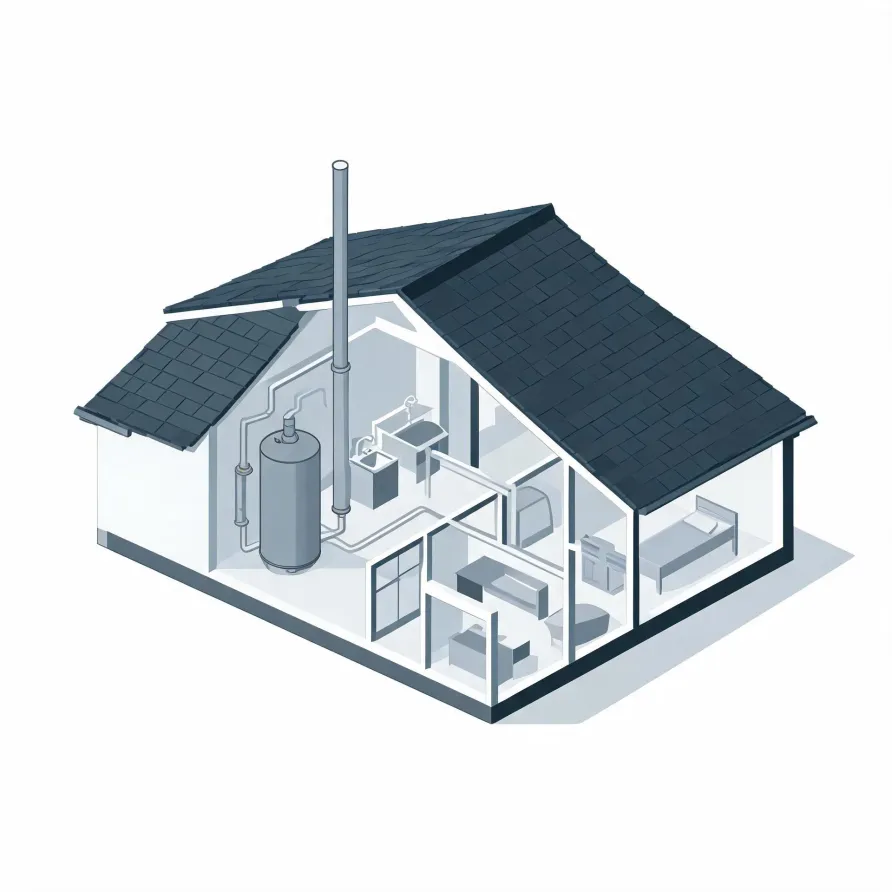
The tank is the piece most homeowners recognize on sight. It sits in a utility closet, basement, or mechanical room and holds a ready supply of hot water for the whole house. A gas-fired unit has a burner at its base; an electric unit has heating elements inside the tank itself.
Feeding the tank are two water lines, one cold coming in and one hot going out, plus a pressure relief valve mounted to the tank's side that releases if pressure builds past a safe point. A gas unit also connects to a flue that runs up and out of the house to vent combustion gases.
The drawing shows a typical layout, and a licensed contractor determines exactly what applies to your home's configuration.
Get matched in Rockland CountyRockland County, by the numbers
72 severe weather events were recorded in Rockland County, New York between 2015 and 2024.
NOAA National Centers for Environmental Information, Storm Events Database, bulk CSV export, events 2015-01-01 through 2024-12-31.Half the homes in Rockland County, New York were built in 1971 or earlier (2020-2024 ACS 5-year).
U.S. Census Bureau, 2020-2024 American Community Survey 5-Year EstimatesRockland County, New York holds 108,945 housing units (2020-2024 ACS 5-year).
U.S. Census Bureau, 2020-2024 American Community Survey 5-Year EstimatesOwners occupy 67.9% of the occupied homes in Rockland County, New York (2020-2024 ACS 5-year).
U.S. Census Bureau, 2020-2024 American Community Survey 5-Year EstimatesSevere Weather Events in Rockland County
Rockland County's weather puts real demands on water heating equipment over time. How hard that equipment has to work is a local question, and the record of severe weather here is part of the answer.
72 severe weather events, 2015–2024. Source: NOAA National Centers for Environmental Information, Storm Events Database.