



Water heater leaking in Brooklyn, NY

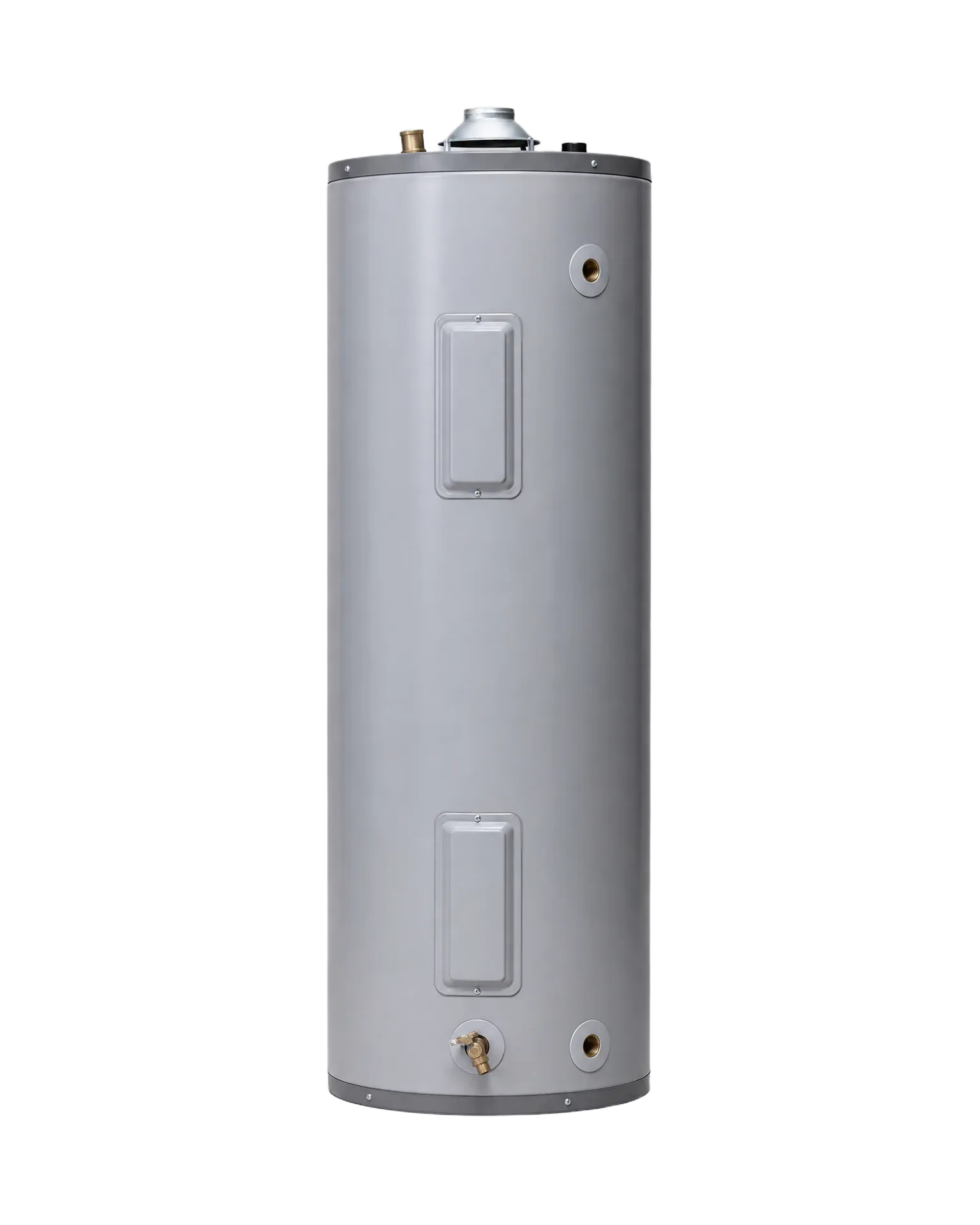
A tall cylindrical gray water heater with two access panels, brass fittings and a drain valve, standing against a plain light gray background.
Start one form

A leaking water heater usually means the tank itself has failed. Steel tanks rust from the inside over the years, and once the lining gives way, water finds a way out through the seams or the bottom. That leak won't seal itself and won't stop. Sometimes the leak isn't the tank at all. A loose drain valve, a failed temperature and pressure relief valve, or a bad inlet fitting can all drip water around the base and look like the same problem. Those parts can often be replaced. A cracked or rusted-through tank can't be repaired. If your water heater is leaking from underneath the tank itself, you're looking at a replacement. If the water is coming from a fitting, valve, or connection on top, a plumber can usually fix that without replacing the whole unit. Either way, a leaking water heater needs attention quickly. Left alone, it can damage flooring, drywall, and whatever is stored nearby, especially in a basement or closet install common in Brooklyn homes.

Why does a leaking water heater matter so much in a Brooklyn house?

  • 2.56 people per household on average

    2.56 people live in the average Kings County household, and that's hot water for showers, dishes, and laundry that stops the moment the tank fails.

  • Half the homes here were built by 1944

    Half the homes in Kings County were built in 1944 or earlier, which means a water heater here is often tucked into a tight basement or closet with old flooring nearby to protect.

  • 72.2% of homes heat with gas

    72.2% of homes in Kings County heat with gas, so a leak at the tank often sits right next to a gas line and vent that a licensed plumber needs to check.

ACS 2020-2024

If the leak is coming from a fitting, a valve, or the connections on top of the tank, a contractor can often repair it without replacing the unit.

If the leak is coming from the tank itself, from a seam or the bottom, there's no fix for that. The tank gets replaced.

A gray-haired bearded man in a dark knit sweater sits on a light gray sofa in a sunlit living room, looking to his left, with a framed artwork, a potted palm, and a curtained glass door behind him.
A middle-aged man in a dark green sweater sits on a light grey sofa looking toward a sunlit window, with a wooden shelving unit, lamp and potted plants in the background.
A man in a dark green sweater sits on a light grey sofa in a sunlit living room, looking to his left, with a shelving unit, houseplants, framed art and a large window behind him.
A gray-haired bearded man in a dark green sweater sits on a light gray sofa in a sunlit living room with a potted plant, framed picture, and dark shelving in the background.

Where to look first

Water tracking down from the top usually comes from the inlet or outlet fittings, the pressure relief valve, or a loose connection on the cold water line. Those parts sit where you can see them and reach them. Water pooling under the tank is a different story. That points to the tank itself, and by the time it shows up on the floor, the inside has already been rusting for a while. Check the top connections first, then look at the floor around the base, since where the water shows up tells a contractor most of what they need to know before they even open the access panel.
Why rust wins eventually

Every tank has a glass lining meant to keep the steel underneath from touching water. It's never perfect. Small gaps form over years, and the steel under those gaps starts to rust. A sacrificial anode rod slows this by corroding in place of the tank, but it wears down and stops protecting the steel once it's gone. After that, rust spreads from the inside out with nothing left to stop it. It's not something a contractor can patch or reseal. Once water reaches the outside of the tank through a rusted seam, replacement is the only way to stop it for good.

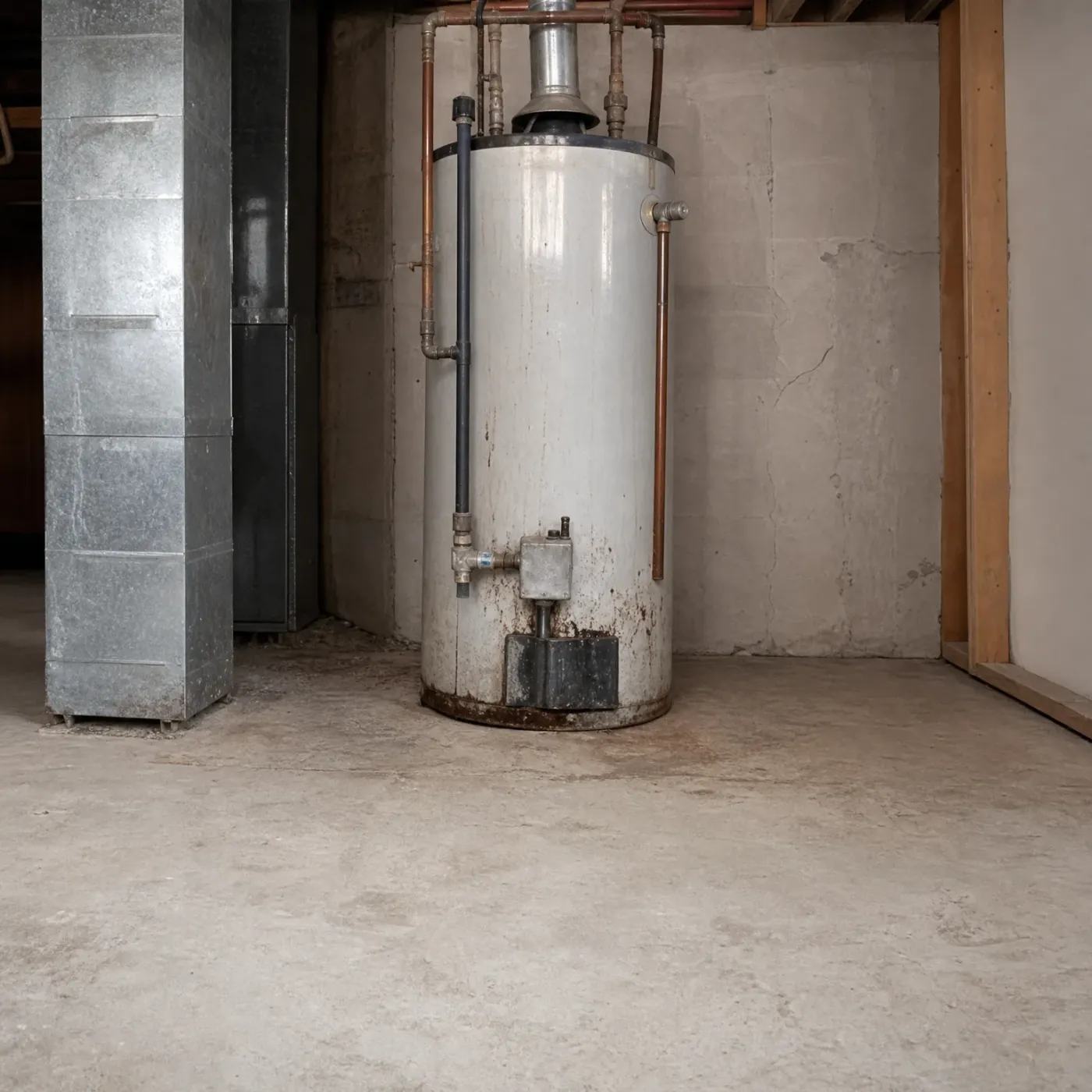
An old rusting cylindrical gas water heater with copper and steel pipes and a flue stands against a concrete basement wall beside metal ductwork on a bare concrete floor.
Before you get your water heater repair
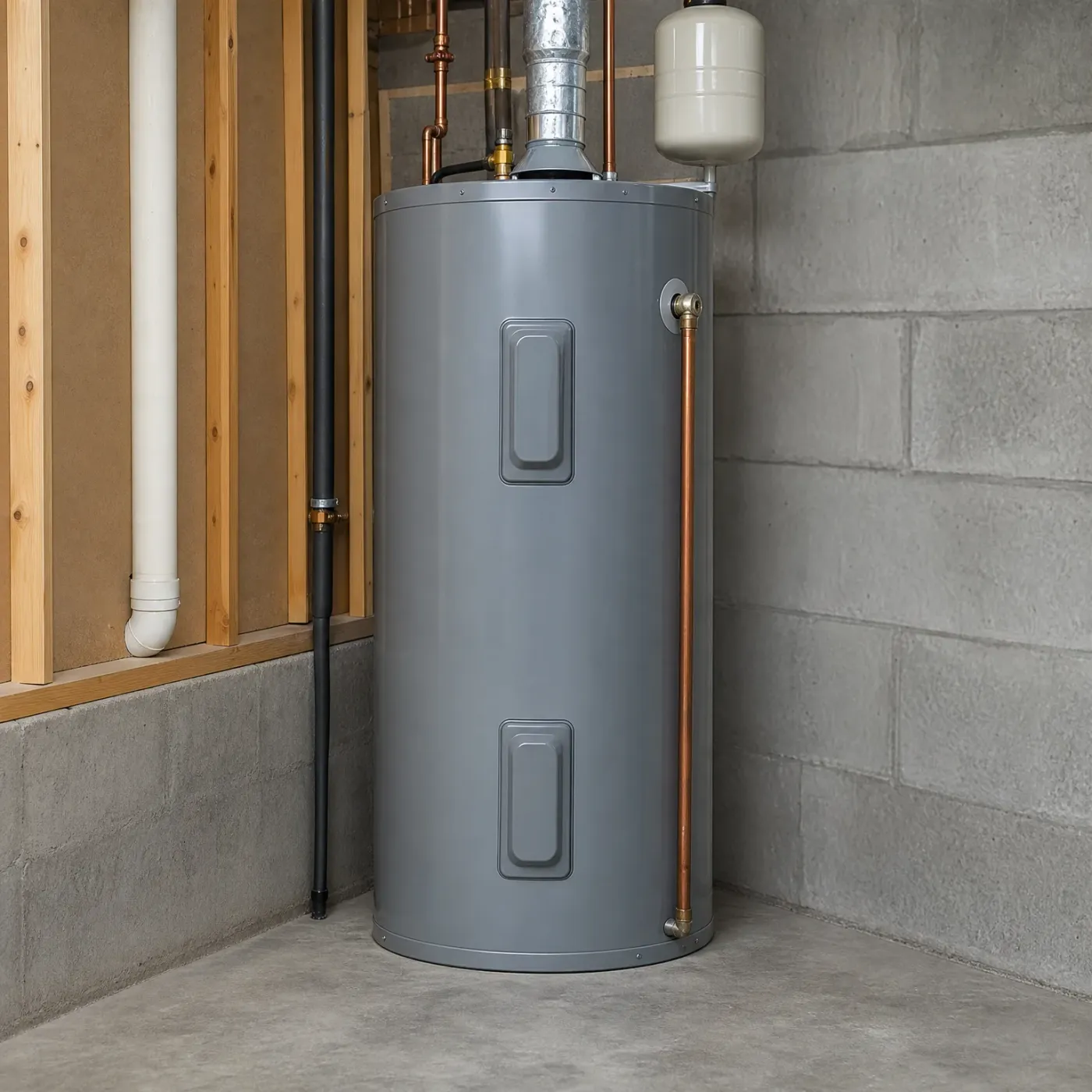
A gray cylindrical water heater with copper piping and an expansion tank stands in a basement corner beside a concrete block wall and exposed wood framing.
After you get your water heater repair

Tank Leak or Fitting Leak

Tank leak

  • Water is coming from the tank body itself, through a seam or the bottom, not from a fitting on top.
  • Steel rusts from the inside, and once it's worn through, there's no weld or sealant that holds.
  • A tank already pushing water out the bottom will keep leaking, and the amount will increase over days.
  • Shutting off the cold supply valve and the gas or power to the unit stops it from refilling and getting worse.
  • A unit in this state needs a full replacement, not a repair, and waiting only means a bigger mess to clean up.
  • If this is the water heater that came with the house, nobody living there now installed it or knows its exact age.

Fitting leak

  • Water is coming from the top of the tank, from the inlet or outlet fittings, the pressure relief valve, or a loose connection.
  • Those parts sit in the open, so a contractor can usually see which one is failing without opening anything up.
  • A loose fitting or a worn gasket can often be tightened or swapped out in a single visit.
  • The pressure relief valve sometimes drips on its own when tank pressure runs high, which is a different issue than a cracked tank.
  • A local contractor who works on these units all year has likely seen this exact fitting fail before.
  • Catching it at the fitting stage means the tank underneath is still sound and doesn't need to be replaced.
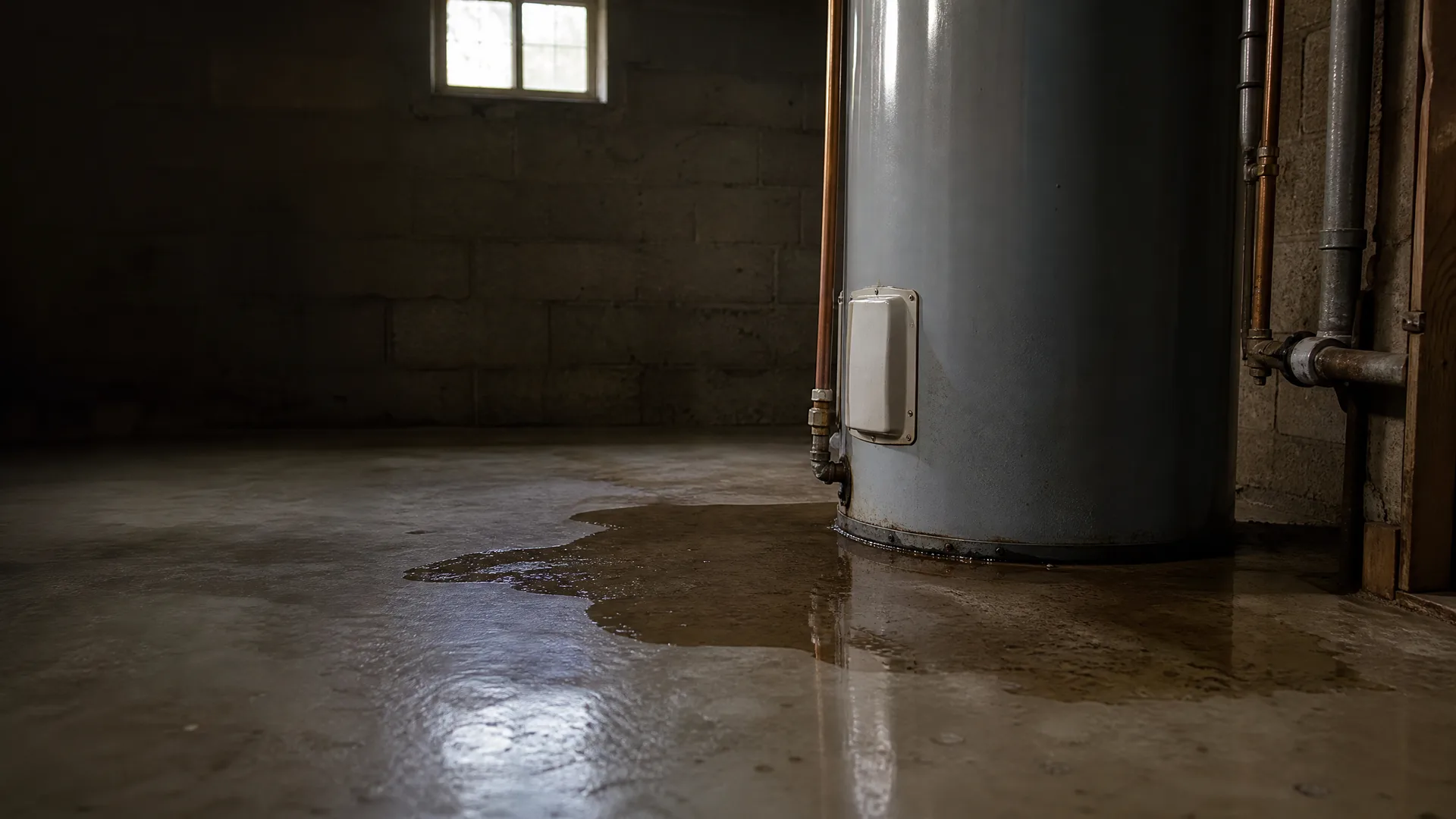
A gray cylindrical water heater stands in a dim basement with concrete block walls, copper and metal pipes along the wall, and a pool of water spreading across the concrete floor.

It's a Saturday morning in February, and you're down in the basement doing laundry in a Kings County rowhouse. The floor is concrete, and when you set a wet towel down near the tank, you notice it's already damp there. You look closer and see water spreading out slow from the base of the tank, maybe a foot wide already, creeping toward the drain in the middle of the floor. The tank itself is quiet, no hissing, no sound at all. You touch the side of it and it's warm, still heating. You stand there a second, looking at the water, trying to figure out how long this has been going on while you were upstairs.

No calling every shop in Kings County

A leaking tank in a Brooklyn basement doesn't wait on your schedule, and finding someone who can look at it today usually means working the phone. Calling around to plumbers, explaining what you saw and where the water's coming from, waiting on callbacks, then doing it all again with the next name on the list. That's hours gone before anyone's even looked at the tank. A contractor working in Kings County sees this same failure every week, old tanks, worn fittings, the same rust patterns in the same rowhouse basements, and knows what to check first. Send the request once and it goes to one contractor, not a handful competing for the job, so you're not stuck sorting through calls while water keeps finding its way out. With a tank already leaking, the time that takes is the thing you can't get back.

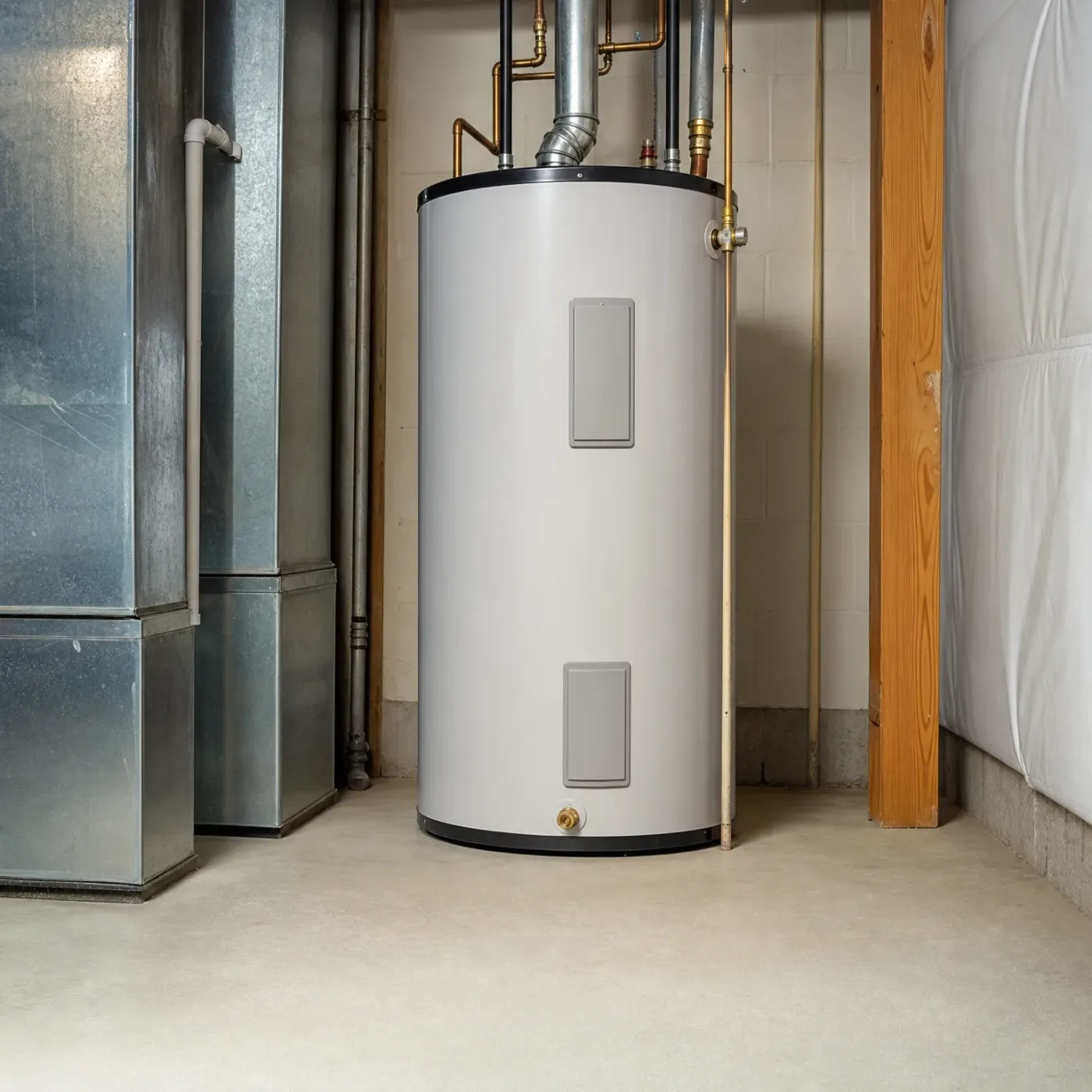
A white cylindrical water heater with two access panels stands on a concrete floor in a basement corner, beside galvanized ductwork, copper and metal pipes, a wooden post, and a concrete block wall.

Working as it should

This is what a sound tank looks like: panels closed, the drain valve dry, the fittings up top snug where copper meets galvanized. No water on the floor, no rust streaking down the side. A unit in this shape has years left in it.

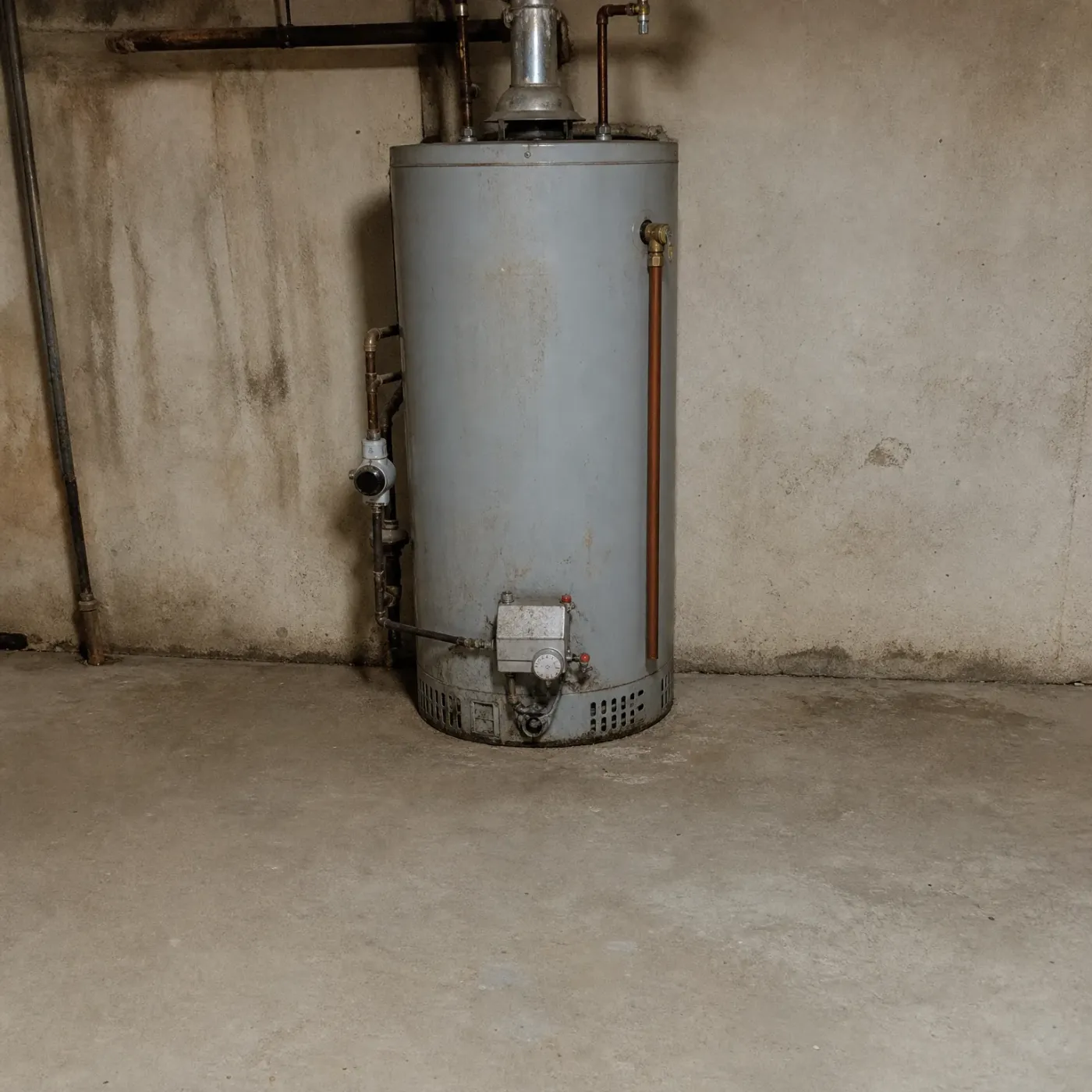
An older gray cylindrical gas water heater with copper and steel piping and a flue, standing on a concrete floor against a stained concrete wall.

Tank past saving

This one's older, set against bare concrete with the flue vent on top and the gas control down low. Once a tank like this starts leaking from the body, the pressure relief valve and fittings aren't the problem. Replacement is the only way forward.

A wooden table in the foreground holds a closed laptop and a ceramic mug of coffee, with a spindle-back wooden chair behind it, a beige wall with paneled wainscoting, a window at left, and a kitchen counter with a cutting board, bowl of fruit and greenery at right.

How the tank actually fails

A glass or ceramic lining coats the inside of a steel tank from the factory. A rod of magnesium or aluminum, the anode rod, sits inside the tank and corrodes on purpose, so the steel doesn't have to. Once that rod is used up, the tank itself starts rusting from the inside out. Nobody sees any of this happen. There's no gauge for it and no warning light. The first sign is water on the floor, because by the time rust works through the steel wall, the damage is already done.

That's why two tanks installed the same year can fail at completely different times, and why there's no real way to predict it from outside the unit. A plumber who works on these tanks every week in Kings County basements has opened up enough of them to know what the inside looks like at different stages, and can tell you fast whether yours is a fitting that tightens up or a tank that's done. Finding that person usually means calling a few plumbers, describing the leak more than once, and waiting to see who calls back first.

A dark ceramic mug on a round wooden table beside a light grey sofa with a woven cushion and knit throw, with a window, potted plant, floor lamp and wooden cabinet blurred in the background.

Power here costs 36.97 cents per kilowatt-hour

Most water heaters here run on gas, but the power that controls the burner and runs any pump still shows up on your electric bill at 36.97 cents per kilowatt-hour. A tank that's already failing and running longer to keep up costs more to ignore every week it leaks.

EIA-861 2025

Shutting off the water and power

If you find a leak, shut off the cold water valve that feeds the tank. It's usually right above the unit, on the pipe coming in. Closing it stops more water from entering while a contractor is on the way. If the heater runs on gas, you can turn the gas control knob on the front to pilot or off, which cuts the burner without killing power to anything else in the house. If it's electric, shut it off at the breaker. A rowhouse basement with the water heater near a finished area or storage can take on damage fast once the floor is standing in water, so cutting the supply matters more than diagnosing what failed.

What a contractor checks on arrival

A plumber who works on tanks all over Kings County every week starts the same way regardless of what you think you saw. The fittings on top get checked first, since those are the easiest to fix and the most common source. Then the pressure relief valve, then the drain valve near the bottom. Only after those are ruled out does the tank body itself get inspected for a failed seam or a rusted-through bottom. That order isn't guesswork. It's the sequence that finds a repairable problem before concluding there isn't one, and it's why one visit from someone who knows the equipment settles the question instead of guessing at it over the phone.

A woman with shoulder-length graying brown hair in a cream knit cardigan sits in a dark armchair indoors, looking off to the side with a slight smile, with a shelf, window and houseplant blurred behind her.
A woman with her hair in a bun sits wrapped in a beige knitted blanket on a couch, holding a sleeping child against her chest in a warmly lit room with a lamp and houseplant in the background.

Where this leaves you

  • A leak from the tank body means the tank is done; a leak from a fitting or valve usually isn't.
  • Shutting the cold water valve and, if it's gas, turning the heater off stops the damage from spreading while you wait.
  • A contractor who works on tanks all over Kings County every week has seen this exact failure plenty of times.
  • One licensed local plumber takes the job, so you're not fielding calls from three different companies at once.
  • Whether it's a repair or a full replacement, the part that matters is getting someone qualified to look at it before more water gets out.

A leaking water heater comes down to one question: is the water coming from the tank itself, or from something attached to it. A fitting, a valve, a loose connection on the cold water line, those can usually be repaired. A seam or the bottom of the tank means the tank is done, and no repair changes that. Until someone's looked at it, shutting the cold water valve above the unit and killing power or gas to the heater keeps a bad situation from getting worse while you wait.

What happens next is easier than it sounds from where you're standing right now. Kings County has plenty of these tanks, in rowhouse basements and apartment buildings alike, and a plumber who works on them every week has already seen the failure you're looking at. They know what a rusted-through seam looks like versus a fitting that just needs a new gasket, and they're not guessing the first time they open the access panel.

Requesting help here connects you with one licensed local plumber, not a list of five companies you now have to call, explain the leak to, and compare against each other. That's one phone number to track, one person showing up who already knows roughly what they're walking into. Whether the fix is a repair or a full replacement, the thing that actually matters is getting someone qualified in front of that tank before more water ends up on your floor.

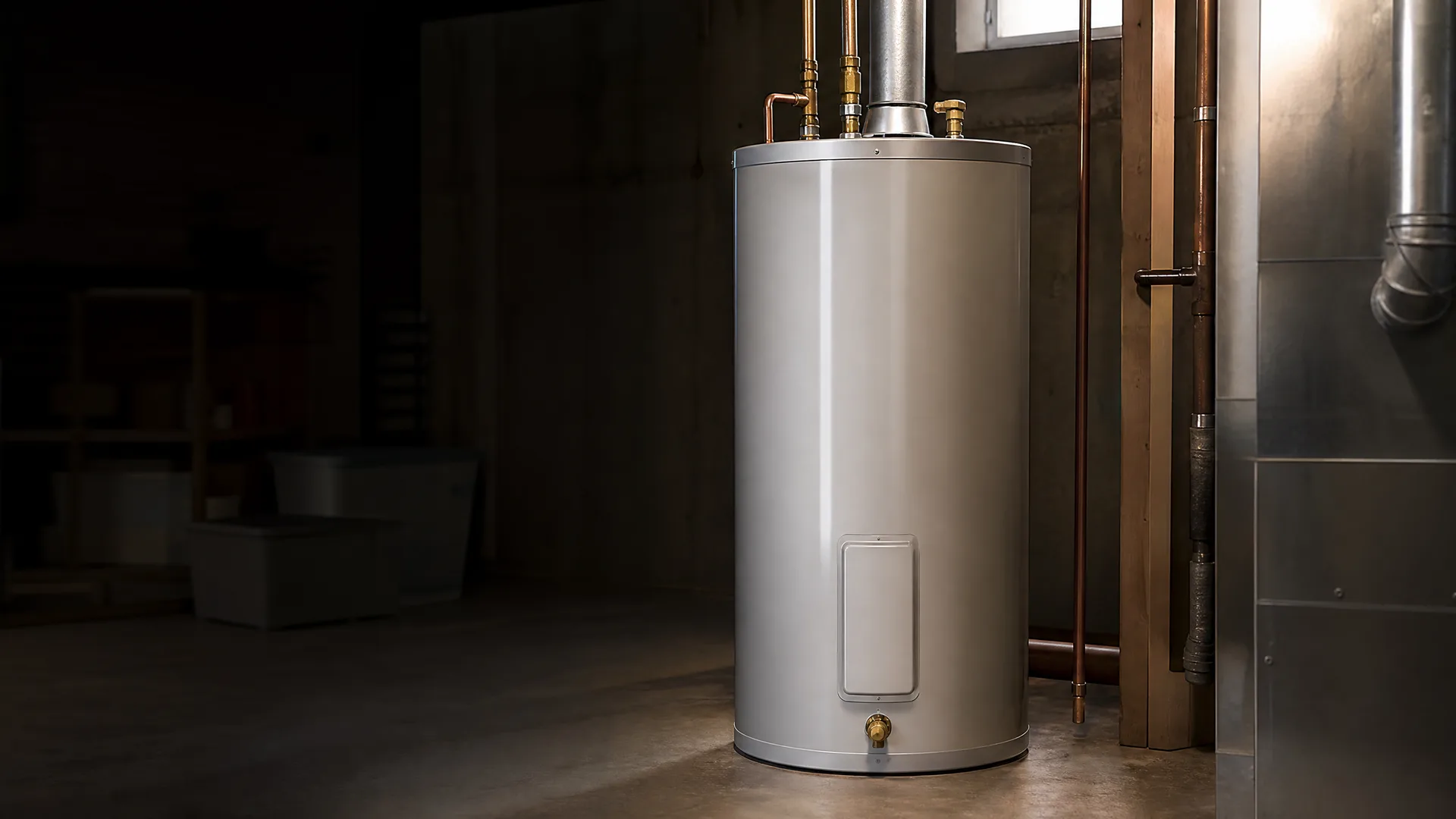
A gray cylindrical water heater with copper pipes and a flue stands on a concrete floor in a dim basement, with metal ductwork and storage bins nearby.

Skip the search

Step 1 of 3: Equipment