You want a straight number before you pay for an install, not a guess that leaves you short on hot water in January or paying to heat a tank bigger than you need. With gas rates and electric rates both high here, getting the gallons wrong costs you either way, every month, for as long as the unit runs.
It depends on how many people live in your house and how many bathrooms draw hot water at once
A household of two usually does fine with a 30 to 40 gallon tank. A family of four typically needs 40 to 50 gallons, and a house with five or more people, or two bathrooms running showers back to back in the morning, often needs 50 to 80 gallons. Most New York homes heat with gas, and a gas tank recovers faster than an electric one, so it can run a size smaller for the same household and still keep up. If your home has a tankless system or is considering one, sizing works differently, based on how many fixtures run hot water at the same time rather than total gallons stored.
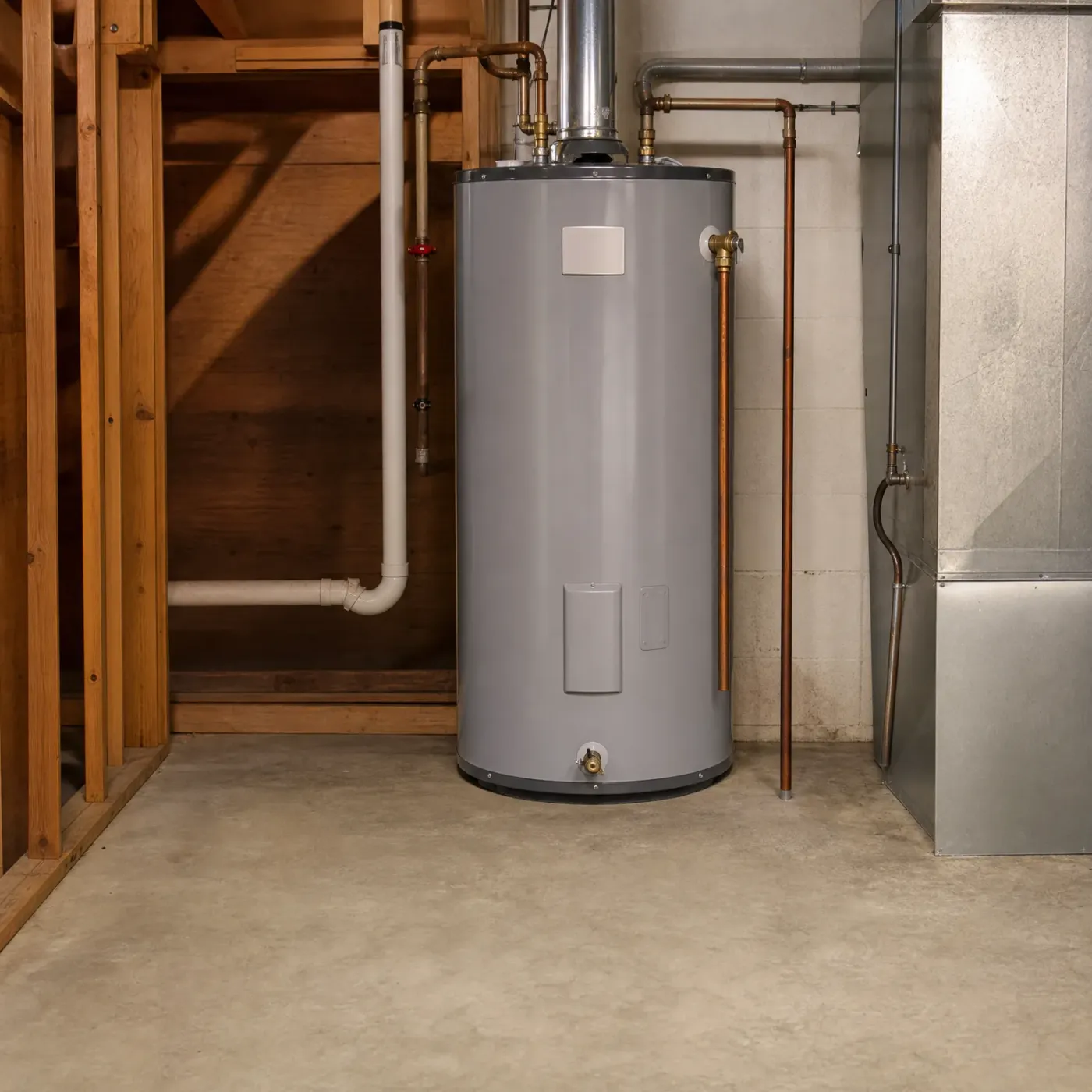
Sized right and running clean
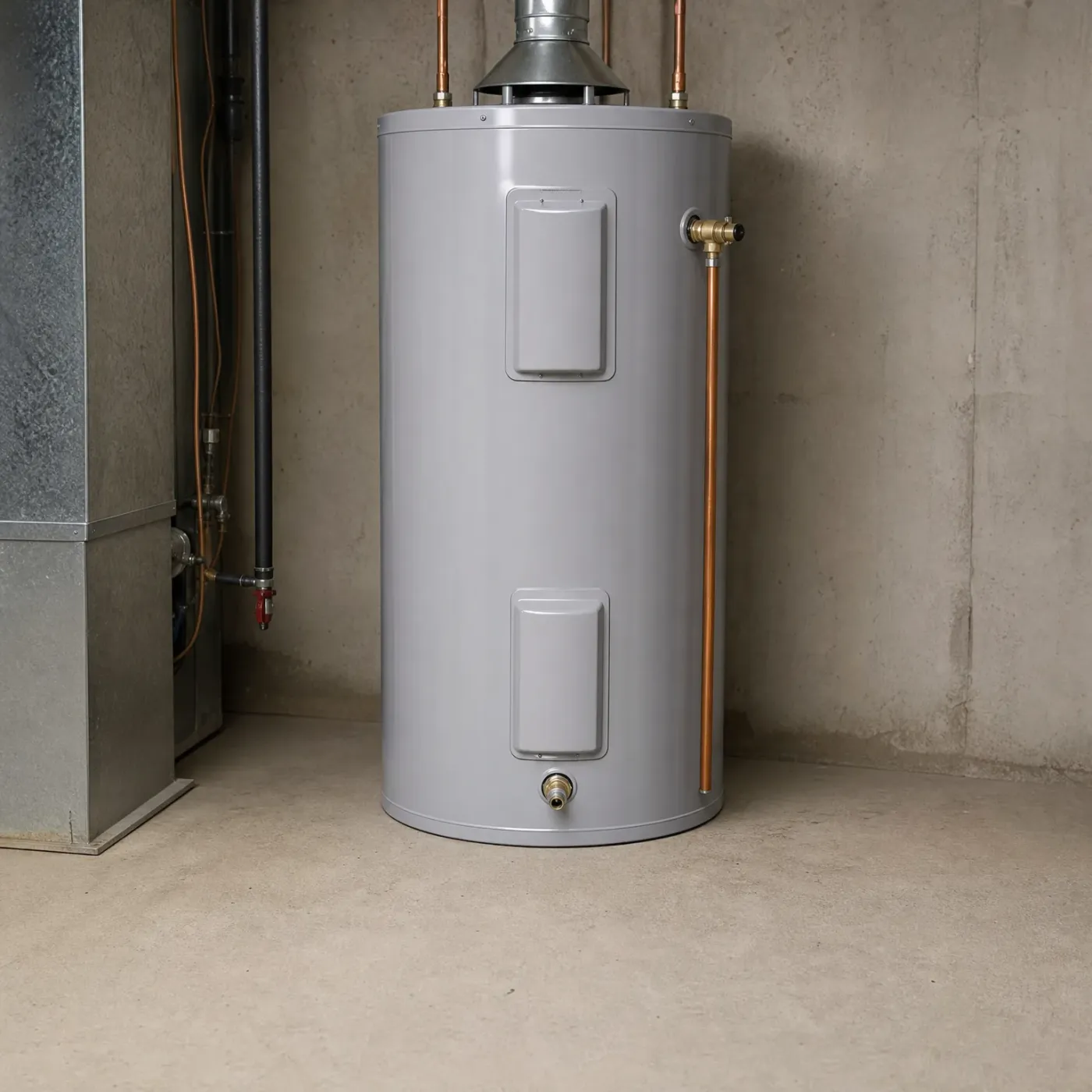
This tank matches the household it serves. The copper and PVC lines are tight, the connections are clean, and there's no rust creeping up the jacket. A water heater sized correctly for your home works like this one for years without strain.
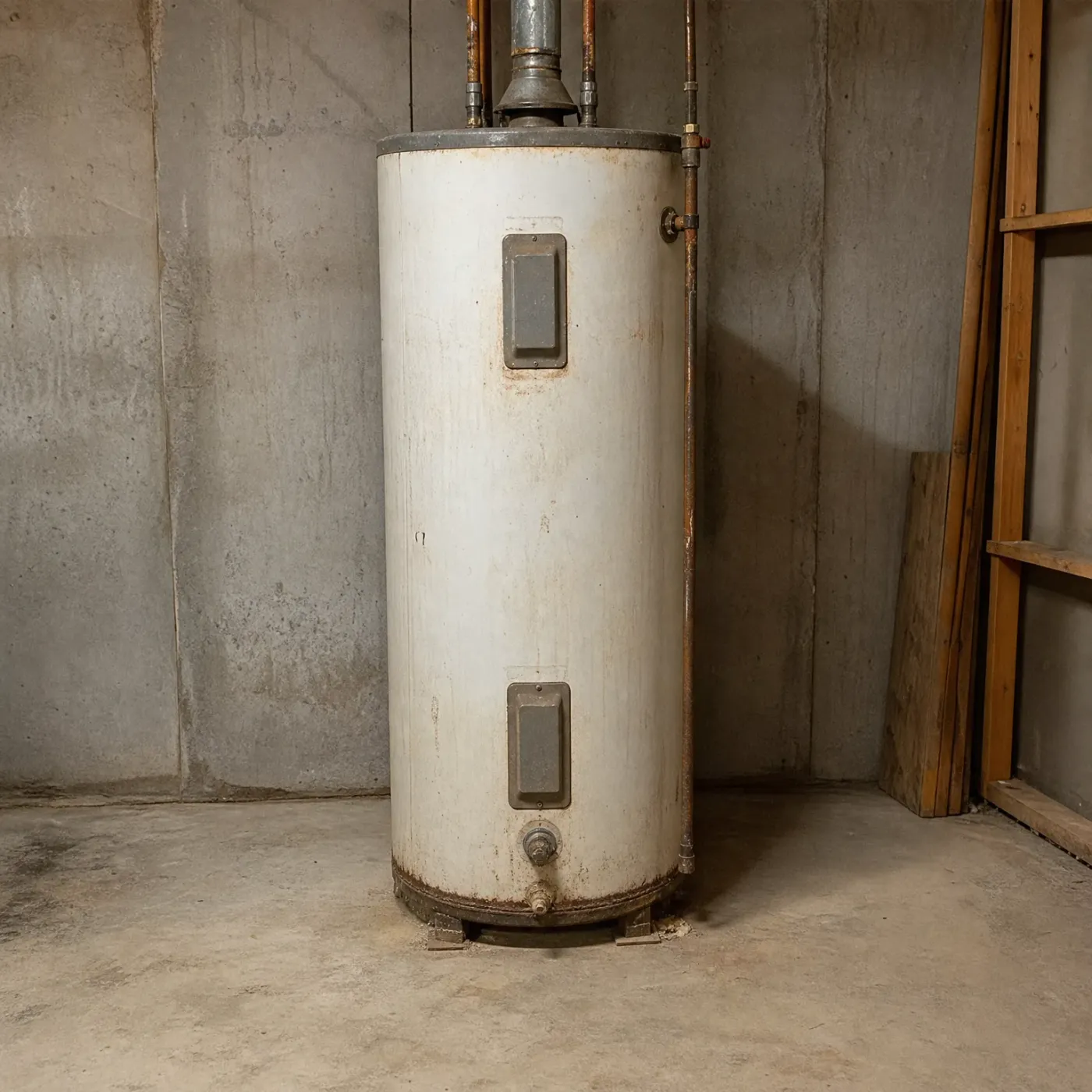
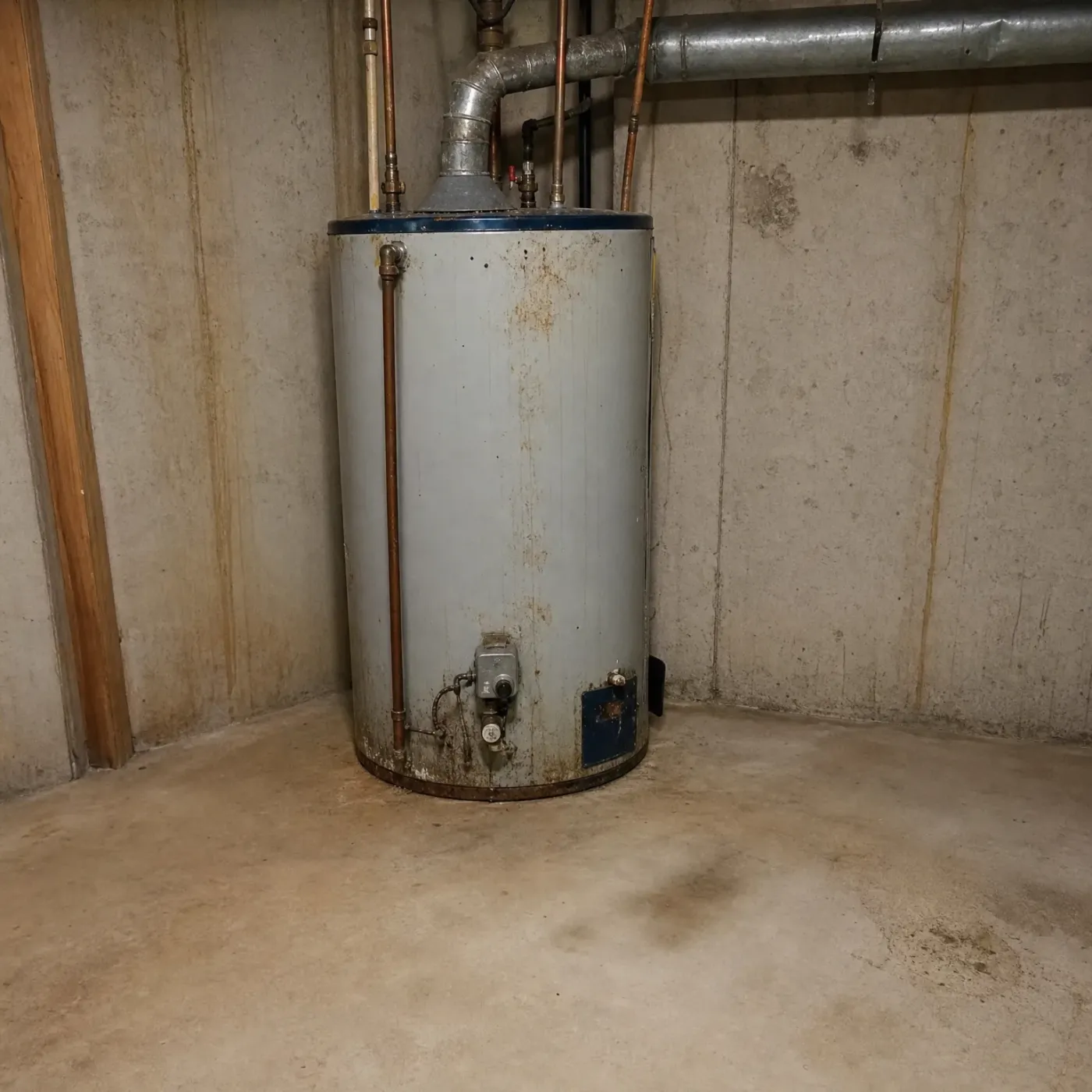
Sized wrong, it shows
Rust across the tank and around both thermostat panels usually means years of strain, not just age. A unit too small for the house runs constantly trying to keep up. That wear shows up here long before the tank actually fails.
Tank or Tankless: Sizing Either Way
Tank
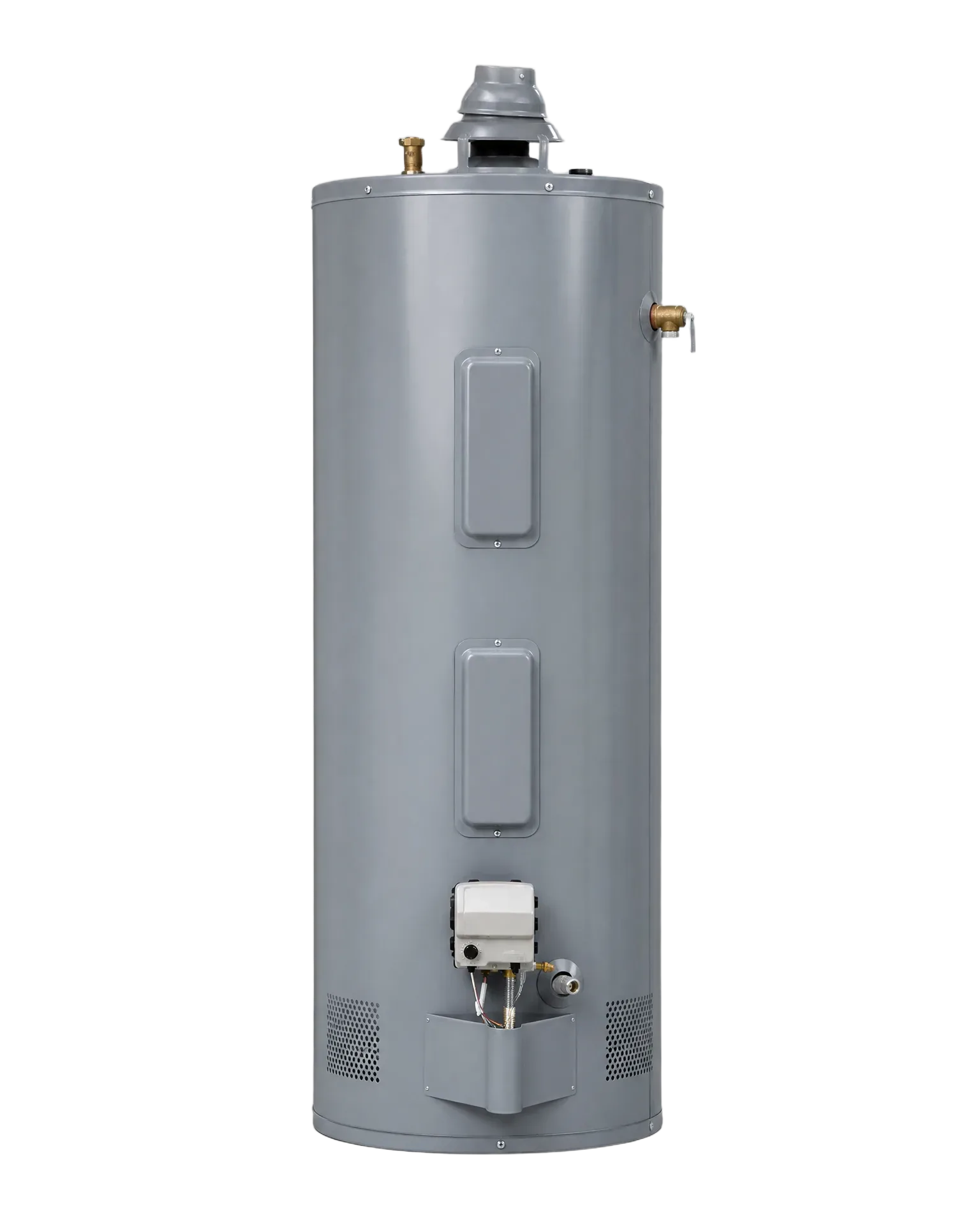
A 40 to 50 gallon gas tank covers most households of two to four people, and gas recovers fast enough to keep up even after a shower runs long.
The tank holds its hot water ready, so a full house in the morning doesn't mean waiting on the heater to catch up.
Install is simpler if you're replacing a tank that's already there, since the vent, gas line and water lines are already in place.
A bigger household, five or more, usually needs a 50 to 80 gallon tank or a second unit to avoid running out.
Standing pilot models keep working in a power outage, which matters more in a place where the grid gets stressed in summer.
The tank takes up floor space, usually a closet or basement corner, and that space has to be there already or made.
Tankless
A tankless unit heats water on demand, so there's no tank to run out, only a flow rate it can keep up with.
Sizing one right comes down to gallons per minute, how many fixtures run at once in your house, not gallons stored.
Gas tankless units need a vent sized for them specifically, which can mean new venting work during install even if you had a gas tank before.
Running the dishwasher, a shower and the washer at the same time can outpace a single unit sized too small, so simultaneous use matters.
No standby loss means it isn't spending gas keeping a tank of water hot all day when nobody's using it.
It takes up far less space than a tank, which matters in a smaller home or an older one with a tight utility closet.
Getting the size wrong is an expensive way to find out you guessed. A tank too small means somebody's taking a cold shower on a January morning. A tank too big means you're paying gas or electric rates, both steep here, to keep water hot you don't use. The math changes with your household, your fixture count, whether you're on gas or electric, and that's exactly the kind of detail a search result can't account for and a local installer can. Someone who works on water heaters in New York homes all year has seen what size actually holds up in a house like yours, not just what a chart says it should be. A single licensed contractor familiar with this area can look at your actual setup, your gas line or your electrical panel, and tell you the size that fits rather than the size that's close enough. That's the piece worth handing off once you know what to ask for.
A gas tank's size is set by first hour rating, not just gallons. A 50 gallon tank with a higher recovery rate can outperform a 50 gallon tank with a weaker burner, especially if your house has more than one bathroom running at once.
That's why two homes with the same gallon count can need different tanks. A contractor who sizes it against your actual fixture count and gas line gets you the right one the first time, instead of a tank that matches on paper and falls short in the shower.
Too small
Someone runs a shower after the dishwasher finishes and the water turns cold halfway through. In January, that's not a minor annoyance, it's a cold morning.
The tank keeps forty or fifty gallons hot around the clock whether you use it or not. Gas and electric rates here both make that a cost you'll see every month.
Before you get your water heater installationAfter you get your water heater installation
59.1% of homes statewide heat with gas
Most houses in New York run a gas water heater because gas already heats the house. That's worth knowing when you size the tank: gas recovers faster than electric, so the sizing math on your install should lean on recovery rate, not just gallons.
ACS 2020-2024 5-year B25040
1
A plumber counts bedrooms and bathrooms to set peak demand.
2
Fixture count and simultaneous use set the first hour rating needed.
3
Gas line and vent size get checked against the new tank.
4
The old tank gets drained and disconnected from gas and water.
The right size is the one you don't have to think about
A household of two to four people with one or two bathrooms is usually looking at a 40 to 50 gallon gas tank, matched to a recovery rate that can keep up when more than one person needs hot water at once. That number comes from bedrooms, bathrooms, and how many fixtures run at the same time, not just a gallon count off a label.
Getting that math right the first time is what a licensed installer does for a living. Once you request an install, you're matched with one local plumber, not a handful of companies competing for your callback, someone who sizes gas tanks in New York homes all year and knows what the gas line and vent need to handle before the old tank ever comes out.
Water Heater Installation
A local pro for your water heater installation
Step 1 of 3: Equipment
Describe your water heater job, and a local pro who handles it gets in touch.
One request and the search for a pro is handled.
Send it once and finding someone is no longer on you.
Skip collecting and comparing quotes for the new water heater.
Fill out one short form instead of calling around.
Your request goes to one pro, not a list of companies.
One installer gets your project, so there's no bidding war over it.