 Get matched
Why your water heater is leaking in New York
Describe your water heater job, and a local pro who handles it gets in touch.
Water on the floor around your water heater is never nothing. It might be a loose fitting. It might be a tank that's rusted through from the inside. It might be the pressure relief valve doing its job because something upstream is wrong. You can't tell which from looking at a puddle, and guessing wrong means living with it longer or making it worse.
A gas water heater that's failing can leak from the tank itself, and once that starts, the tank doesn't get better. A fitting or valve, on the other hand, is often a straightforward fix. The difference matters for what happens next, and it's not something to sort out by trial and error with hot water involved.
What you need right now is someone who can look at it, tell you which one you're dealing with, and tell you straight whether it's worth fixing or time to replace it. Not a guess from a forum, not a shrug. Send the details here and a contractor who works on water heaters in your area will get in touch.
You won't be the one calling around New York trying to find someone free this week. That part's off your plate the moment you send this. The contractor who reaches out will already know what you told them about the leak, so you're not starting from zero on the phone.
With gas lines and electric power both in the mix near a water heater, and with New York's power costs being what they are, this isn't a spot for patchwork. A leak left alone doesn't stay small, and a tank that's going doesn't wait for a convenient weekend to finish going. Getting someone qualified to look at it now is the straightest path to knowing what you're actually dealing with.
Why is my water heater leaking?
A puddle under the tank or water dripping from a fitting usually means one thing has gone wrong, not everything at once. The fix depends on where the water is actually coming from, and that's not always obvious from looking at the floor. Before you shut off the gas or the power, it helps to know what's likely and what it means for a tank that's been sitting in a New York basement or closet for years.
Most leaks start at a fitting, a valve, or a tank that's corroded through
A leak at a fitting or the drain valve is usually a loose connection or a worn washer, and that can often be tightened or replaced. A leak from the pressure relief valve means it's opening because the pressure or temperature inside the tank is too high, which points to a problem upstream rather than the valve itself. Water coming from the bottom or side of the tank itself is different. Steel tanks corrode from the inside over the years, and once rust works through the lining, the tank itself is leaking, not a part attached to it. That kind of leak doesn't get fixed. It means the tank needs to be replaced before it fails outright and floods the space around it.
You get up before work and go in to shower. The water never turns to steam, just stays lukewarm, then cold. You check the floor out of habit now, and there it is again, a thin line of water creeping from the base of the tank toward the drain in the hall closet. The towel is still on the rail, dry. You left for the subway twenty minutes later than you meant to, the shower skipped, a bucket set under the fitting so it doesn't reach the carpet before anyone can look at it. You've caught small things before they turned into bigger ones. This is one more, and you'd rather hand it to someone who can look at the tank itself than keep guessing at it on your way out the door.
A local pro for your water heater repair

Once you send the form, finding a pro is off your list.
Sending the form costs nothing.
How the Leak Points Back
- Water pooling at the base often traces to the tank itself, where sediment builds along the bottom and corrodes the steel from inside.
- A fitting leak usually shows as a drip or damp spot at a single joint, not a spreading puddle, because the connection itself has loosened or worn.
- The temperature and pressure relief valve sits near the top of the tank and opens on its own when pressure inside climbs too high.
- A failed anode rod lets the tank's interior corrode faster, since that rod is there to take the corrosion instead of the tank wall.
- Gas water heaters can leak from the drain valve at the bottom, which is easy to mistake for a crack in the tank itself.
- Water near the flue pipe at the top of a gas unit points to condensation or a venting problem, not the tank holding water.
Every part of a water heater fails a different way, and where the water shows up tells you which part it is. Sediment settles at the bottom of the tank over time, and in gas units that bottom sits right over the burner, so the steel there corrodes faster than anywhere else. Once it rusts through, the leak doesn't stop or slow down. It just gets worse. A fitting is a different story. The inlet and outlet connections, the union joints, even the drain valve threads can loosen or wear, and when they do, you get a drip at that one spot rather than water spreading across the floor. That's a repair, not a replacement, most of the time. The pressure relief valve is doing exactly what it's built to do when it opens. It's venting water on purpose because pressure or temperature inside the tank went higher than it should. That's worth a call on its own, since it usually means something else upstream is pushing the tank past its limit. The anode rod doesn't leak, but when it's used up, the tank starts corroding in its place, and that corrosion eventually becomes a leak somewhere else in the tank. On gas units, check the flue pipe too. Water near it is often condensation from the exhaust, not the tank failing.
59.1% of homes statewide heat with gas
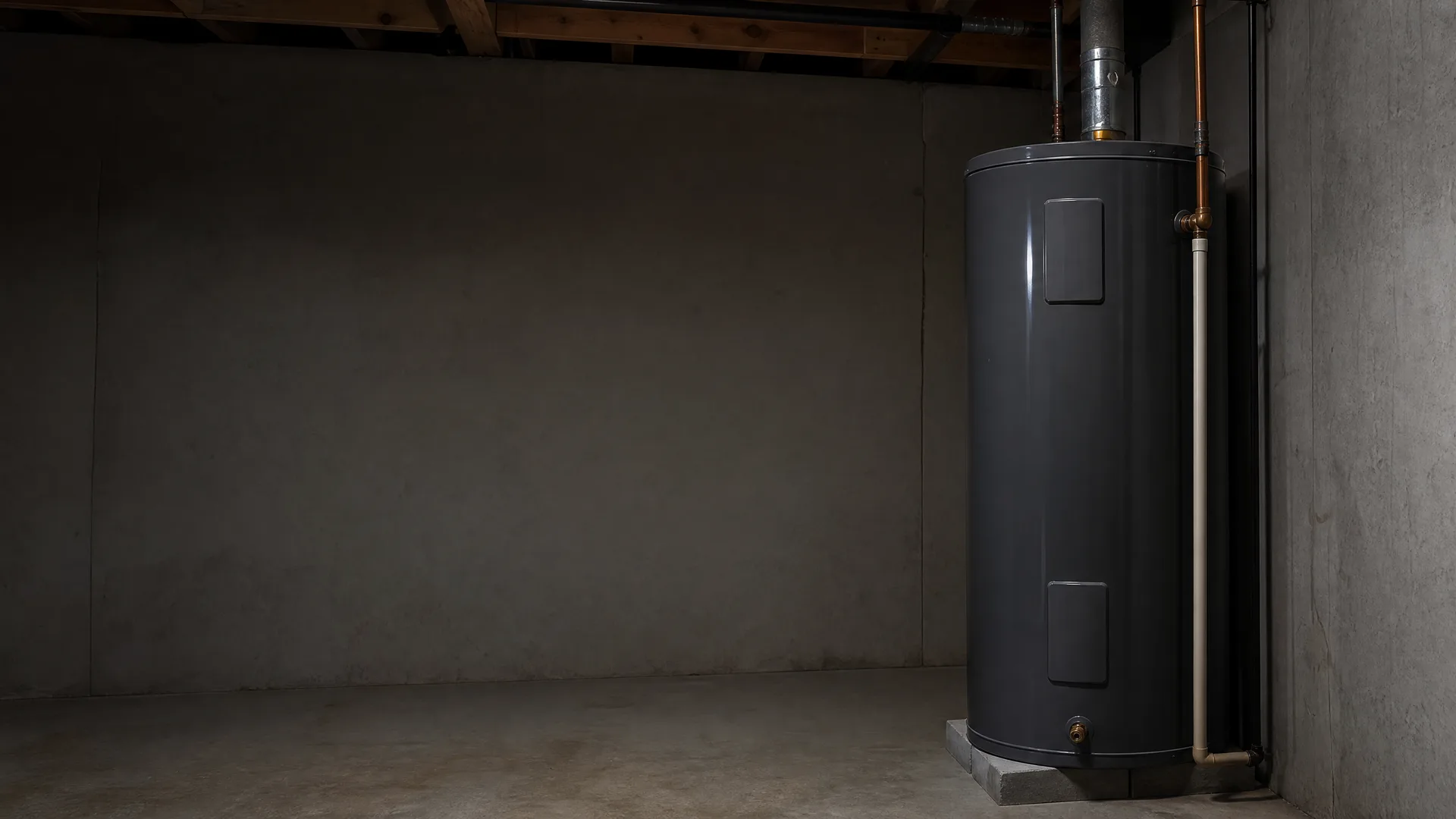
Most water heaters in New York run on gas, same as the furnace. A gas water heater adds a gas line and a flue to the list of things that can fail, so a leak isn't always water. If you smell gas near the tank along with the puddle, that's a different call than a loose fitting.
ACS 2020-2024 5-year B25040
A leaking water heater almost always comes down to one bad part: a loose fitting, a failed valve, or a tank that's rusted through. Tighten or replace the first two and the leak stops. A rusted tank means the water heater needs to come out before it fails completely and leaves you with a flooded closet and no hot water. You don't have to figure out which one it is before you ask for help. Once you send the form, you're not the one making calls or explaining the problem to strangers anymore. A contractor who knows New York gas water heaters, the flues, the gas lines, the venting, takes it from there. Until then, keep an eye on the puddle, keep the area dry if you can, and don't ignore a gas smell near the tank. That's the one sign that means stop checking and get out.
Get the right pro for your water heater
After you send the request, you're done searching.