One request and it's handed off
Why your water heater makes popping noises in New York
That popping or rumbling sound usually means sediment has built up at the bottom of the tank, and most gas water heaters in New York get it sooner or later from the local water. This page gets into what's making the noise and when it means the tank is actually at risk. Send in your address and you can stop chasing down who handles this.
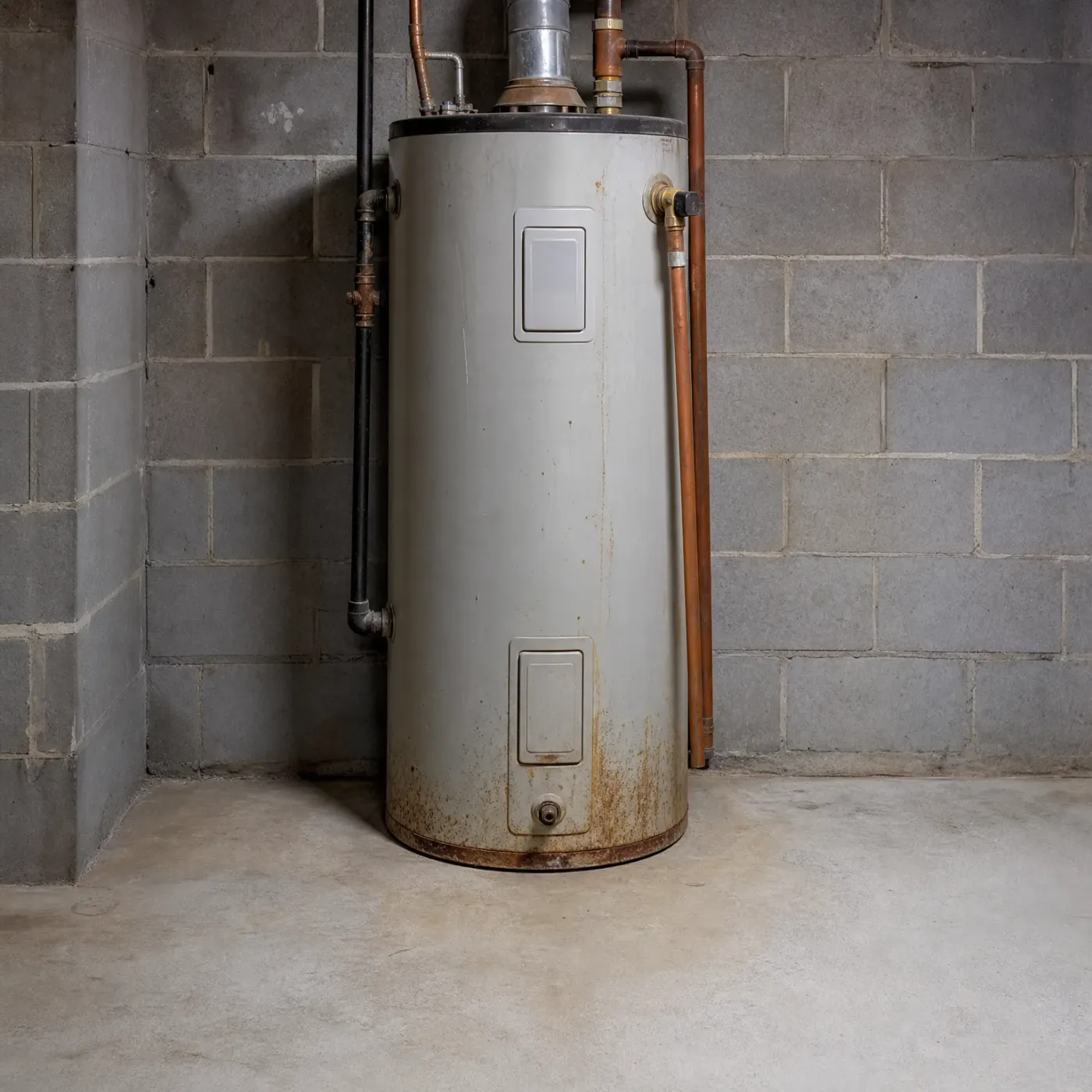
Hand off my repairThat popping sound is water trapped under a layer of sediment at the bottom of the tank, boiling and escaping through it every time the burner fires. Sediment settles out of the water over time and sits on the hot surface at the bottom, and once it's there the burner has to heat through it to reach the water above. Gas water heaters work the burner harder as that layer thickens, so the noise usually gets louder over months, not weeks. It's not dangerous by itself, but it means the tank is running less efficiently than it should, and the sediment layer can eventually scorch the metal underneath it. A tank that's been popping for a while is worth having looked at, especially if you've noticed the water taking longer to heat up or the burner running more than it used to.




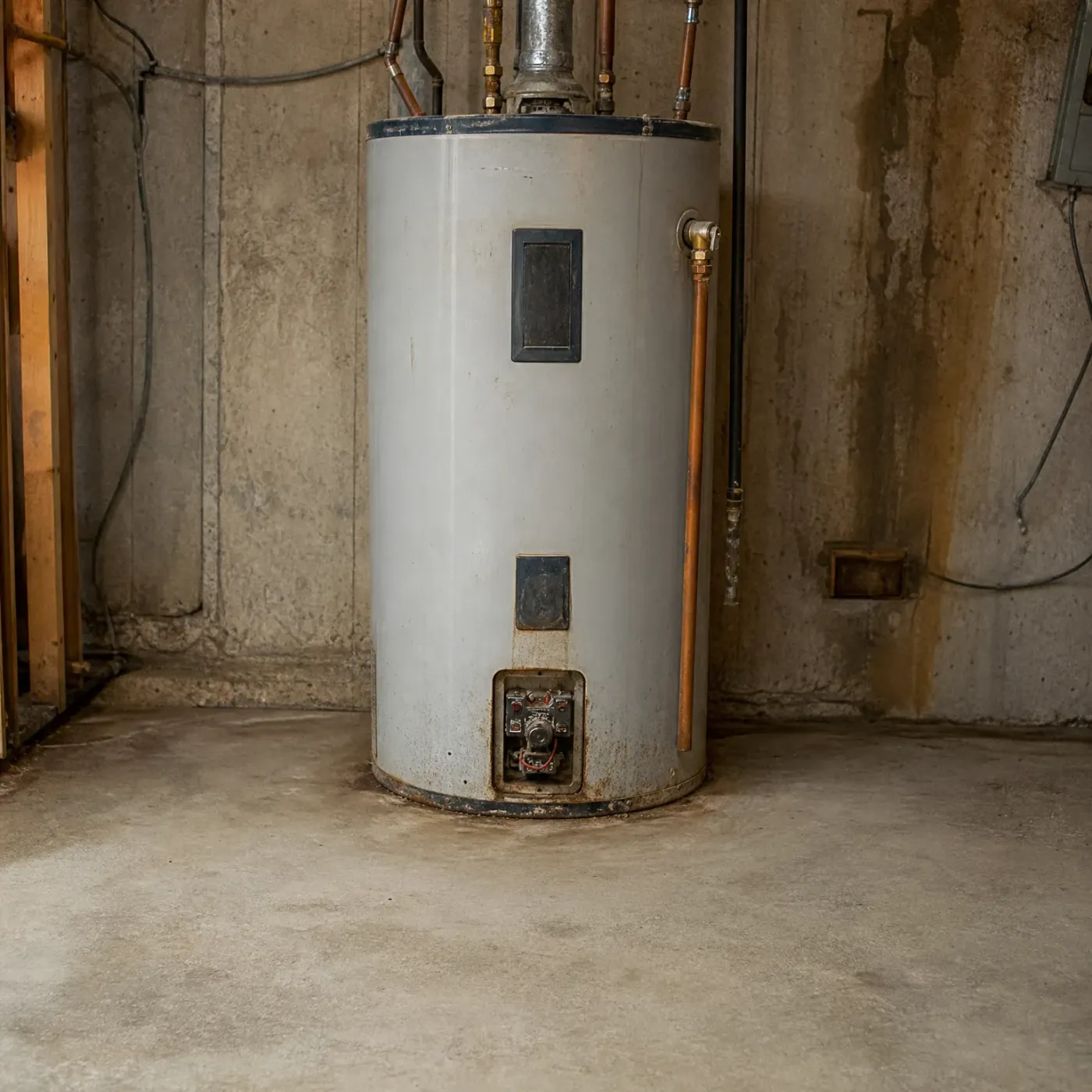
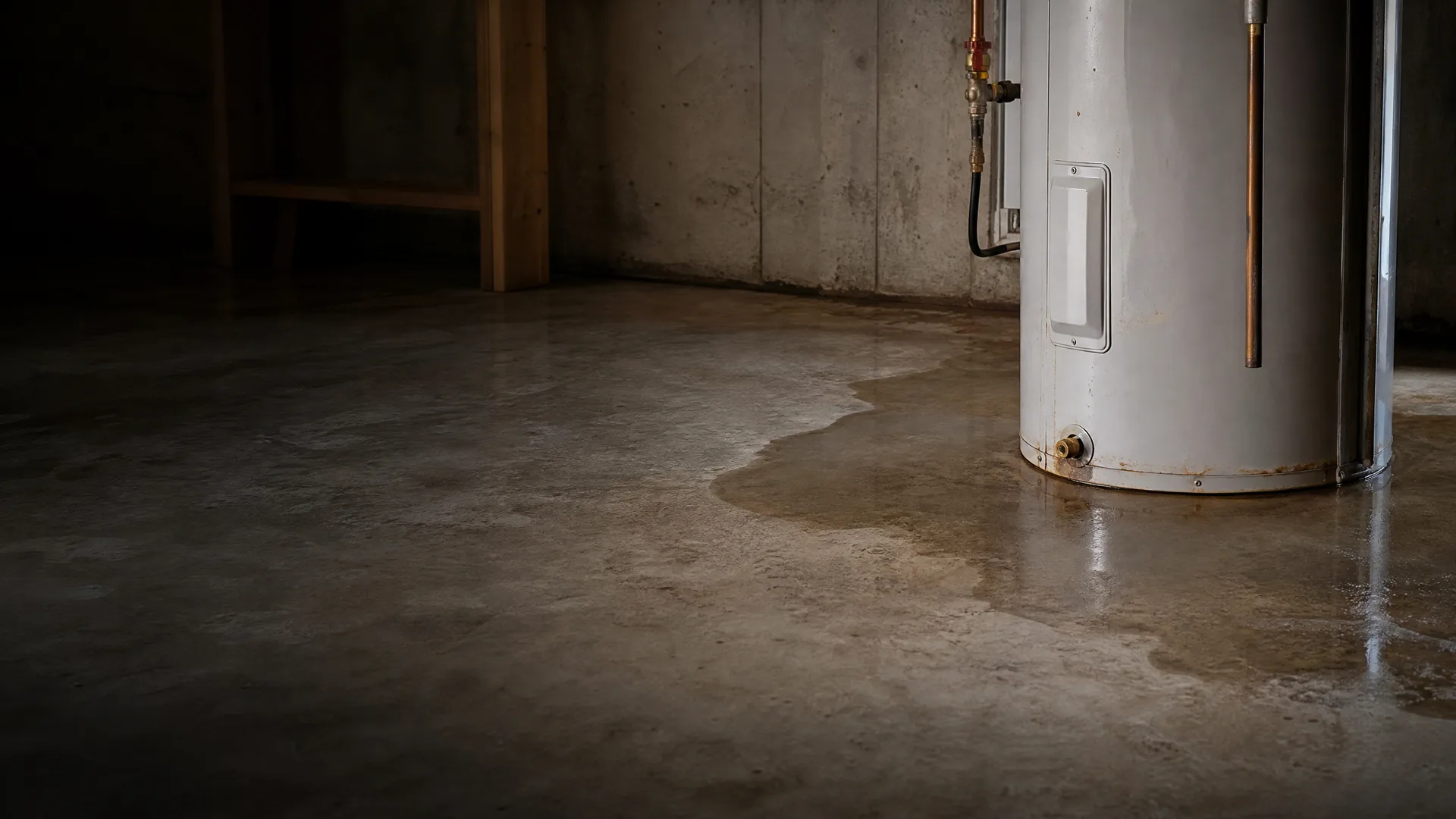
It's Saturday morning and you're down in the basement with a load of laundry when you hear it, that popping sound you've been noticing more often lately. You set the basket down and look at the water heater. There, around the base of the tank, water has already spread into a thin pool on the concrete, catching the light from the bare bulb overhead. You crouch down to check where it's coming from. The popping has stopped now, like the tank knows you're listening. You stand there a moment, laundry forgotten, trying to decide if this is something you can wait on or something you can't.
Why does my water heater pop more in the morning?
Mornings are when the tank has sat the longest since the last draw, heating and reheating overnight to hold its set temperature while nobody's using hot water. That's usually when the popping is loudest, and it's natural to wonder if the tank is working harder at that hour or if something changes overnight.
The tank has had all night to reheat, so the sediment gets hit the hardest right before you wake up
Overnight, nobody's drawing hot water, so the burner cycles on and off just to hold the set temperature, and each cycle heats that layer of sediment at the bottom of the tank again. By morning it's had more cycles to trap water underneath it than at any other point in the day, so the first pop you hear is often the loudest one. Once you start using hot water, the tank draws in cold water that cools things down and breaks up that cycle for a while. If you're on a gas water heater, which is common in New York, this pattern tends to be more noticeable because the burner sits right under the tank, close to where the sediment collects.


59.1% of homes statewide heat with gas
If your water heater runs on gas, that popping is the burner firing under a layer of sediment, not a lamp or coil heating from the side. Gas burns at the bottom of the tank, right where sediment settles, so the noise shows up sooner there than it would with other fuel types.
ACS 2020-2024 5-year B25040
Done looking for a water heater pro

The pro who reaches out is licensed in New York.
No fee to send it, and nothing to sign.
What That Popping Tells You
- Popping means sediment at the bottom of the tank is trapping water that boils and pushes out every time the burner fires.
- Light popping with a clean flame is normal wear from New York's water and not a sign the tank is failing.
- Rust at the tank or fittings alongside loud banging means the sediment has sat long enough to wear on the metal.
- A contractor who flushes tanks all over New York knows how much sediment is typical here and what it takes to clear it.
- One licensed, local contractor takes the call, so you're not fielding quotes from a string of companies while you're trying to figure out what's wrong.
- Once you know what the noise is telling you, the next step is getting someone who works on these tanks regularly to look at yours.
The popping comes from water caught under sediment, boiling against the bottom of the tank and forcing its way out each time the burner fires. New York's water leaves that sediment behind in nearly every gas tank eventually, so hearing it doesn't mean something's gone wrong. What matters is what comes with it. A clean burner flame and a light pop now and then is just the tank doing its job with mineral buildup underneath it. Rust around the tank or the fittings, paired with banging instead of a soft pop, means that sediment has been sitting long enough to start working on the metal itself, and that's worth having someone look at.
Figuring out which one you're hearing isn't always obvious from the basement stairs. A contractor who flushes tanks across New York all year knows what's typical for this water and what sediment buildup usually looks like by the time it starts making noise. That's the kind of read that's hard to get on your own.
When you send the request, it goes to one licensed contractor local to you, not a handful of companies competing for the job. You'll talk to one person who already knows what tends to fail in tanks like yours, not a string of callbacks while you try to sort out who's worth hiring. The noise already told you what's going on underneath. The next step is just getting someone qualified to confirm it and deal with it.

Water Heater Repair
It's off your list after this

- Tell a local repair pro what your water heater is doing.
- Say what's going on with your water heater, and a pro who works on them reaches out.

- Send the request today and stop worrying about who to call.
- Send the request and finding a pro stops being your problem.

- Skip searching for a water heater pro and answer a few questions instead.
- One form replaces the calls you'd make to find a water heater pro.

- Your request stays with one local pro.
- Your request goes to one pro, not a list of companies.